Exploring the Dark with Martin Simmonds: From The Department of Truth to Dracula
Written by Rossano D’Angelo
With his bold style and striking sense of atmosphere, Martin Simmonds has become one of the most recognisable artists in today’s comic scene. From Punk’s Not Dead and Friendo to the acclaimed The Department of Truth, his work blends beauty and darkness in a way that immediately draws readers in.
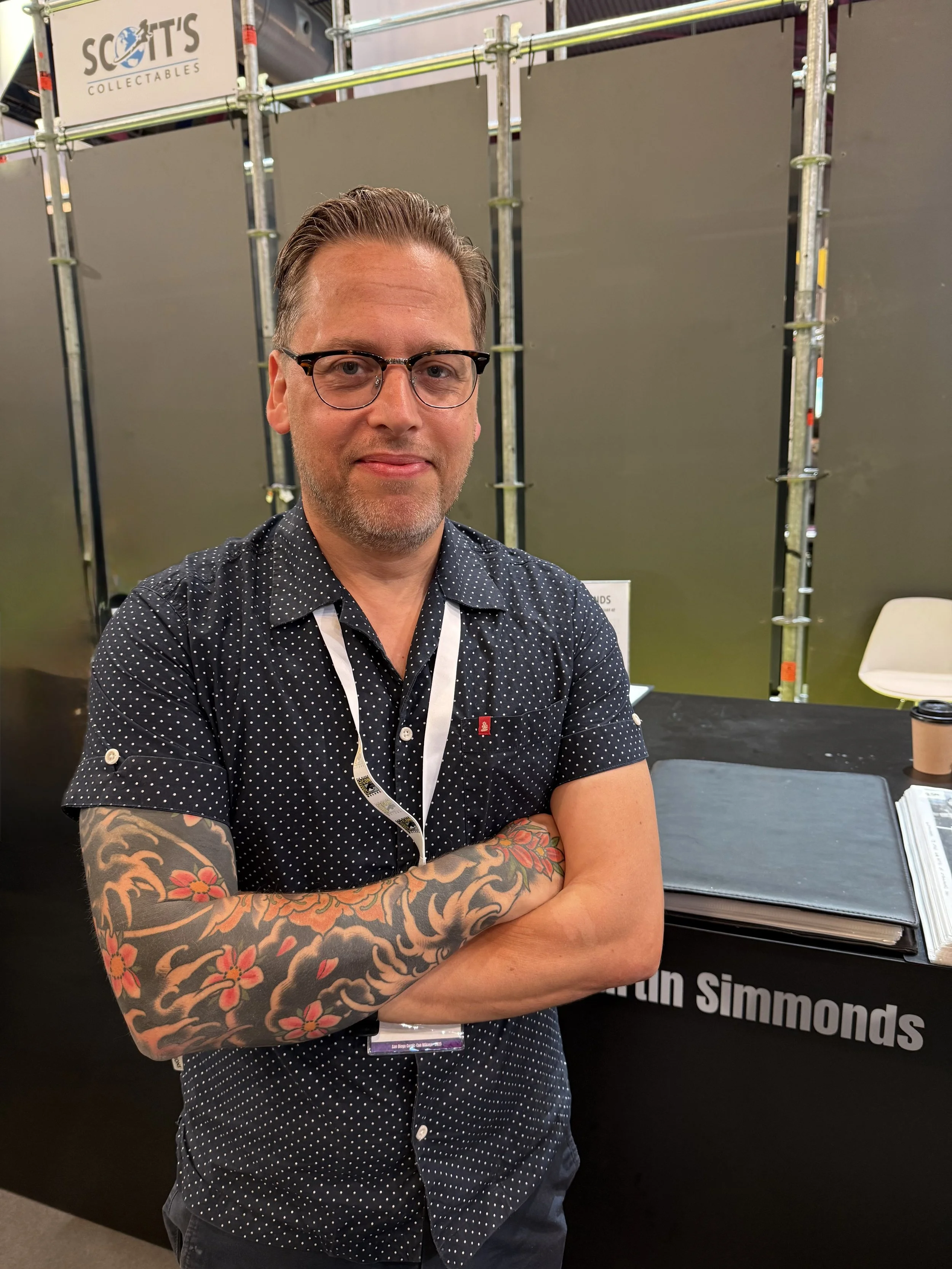
At SDCC Málaga 2025, I had the chance to talk with the Eisner-Award Winning artist about his creative partnership with James Tynion IV, the challenges of bringing horror to life in Universal Monsters: Dracula, and how his distinctive approach could work across different genres.
Rossano D’Angelo: First of all, congratulations on your work. I recently read Universal Monsters: Dracula, which you worked on with James (Tynion IV, ndr.), and it was amazing - I really enjoyed it. My first question is about the two of you: how did your collaboration with James Tynion IV start, and how has it developed into such a strong creative partnership?
Martin Simmonds: James actually contacted me around 2018. He’d been put in touch with me by our mutual friend Matthew Rosenberg. James was looking for someone for The Department of Truth, and Matthew suggested my name.
At the time, I was working on Punk’s Not Dead for IDW, which was a very different kind of book. I’d also been doing a lot of Inktober sketches online in this scratchy, messy style that felt more natural to me. James saw those and asked if I’d be willing to work in that style for his new project. There wasn’t even a story yet - he just liked the look of it.
It all came together very naturally. We hit it off right away, and there was chemistry from the first issue. James is great at choosing artists who fit his stories. By issue #3 of The Department of Truth, we’d really found our stride, developed a shorthand, and built real trust. He gives artists room to breathe and bring their own ideas, and that’s continued ever since. Even Dracula felt like an extension of that same creative relationship.
Speaking of The Department of Truth, it’s not really a conventional comic - it dives deep into conspiracy theories. How do you find the American audience reacting to that? Have you ever had negative feedback because of the subject matter?
At first, we were a bit concerned that people might think we were pushing our own beliefs, but that’s not the case. We’re not trying to preach or say which conspiracies we believe in. James found a way to tell the story impartially - it’s more about how ideas can become real through belief.
We’ve never really had any backlash from fans. And we’re careful: all the conspiracies we use are based on real-world ones; we don’t invent them.
Both James (Tynion IV, ndr.) and I were already big UFO fans, so that helped. He even sent me a huge “series bible” full of research before we started. You can tell he’d been developing The Department of Truth in his head for a long time - it’s a world he knows inside and out.
Going back to Dracula - these days, readers are very sensitive about topics like representation or political correctness. Do you find it challenging to draw horror while respecting those limits? How do you decide what’s appropriate to show?
I’ve always preferred implied horror to explicit gore. What you don’t show is often more powerful. I’m not really into splatter or shock for its own sake - I find the suggestion and atmosphere much more interesting.
That’s what we did in Dracula. The original film is black and white, so adding color allowed us to reinterpret it. For example, we used red to show Dracula’s influence growing - you might see a little color creeping into a panel, and then suddenly a full page would burst with it.
Skybound, our publisher, wasn’t sure at first how much blood we could show, since the film has almost none. But I think the real limit isn’t about what you show; it’s about how you treat it. Horror can be horrific, but also beautiful in its depiction.
Even in The Department of Truth, I’ve drawn some of the most disturbing things imaginable - like the Star-Faced Man eating babies - but you don’t need to show it graphically. Suggestion can be just as, if not more, powerful.
Moving beyond horror, could you see yourself working on a superhero book? And if so, would you adapt your current style to fit that genre, or keep your artistic voice and reinterpret the characters through it?
Even if I made some changes, I’d still want the work to be recognisable as mine. I don’t think genre matters - it’s all about execution. I’d be happy to do anything, even a quiet slice-of-life story, as long as it’s done well.
Whatever the script gives you, you find creative ways to make it visually interesting. In The Department of Truth, for example, a lot of it is just two people sitting and talking, but I still have to make that dynamic. The same principles would apply to superheroes.
I use a lot of abstraction in my work, and I’d love to bring that into superhero comics - to experiment and challenge the form. Even slow, dialogue-heavy scenes can be exciting if you find ways to let the art breathe and create contrast between quiet and intense moments.
And finally, on a personal note—if you could pick one character or title from comics history to work on, what would it be?
That’s a tough one! If I were to do a superhero book, it would probably be Batman - specifically something involving the Joker. I grew up with The Killing Joke and Arkham Asylum, and those left a huge impression on me.
But the book that influenced me the most growing up was Hellblazer. My local comic shop used to host Dave McKean, and he’d hang his Hellblazer covers on the wall. I remember being completely blown away by that art - the imagery, the tone - it’s stayed with me ever since.
So yes, it would probably be John Constantine and the Devil. Something in that world.
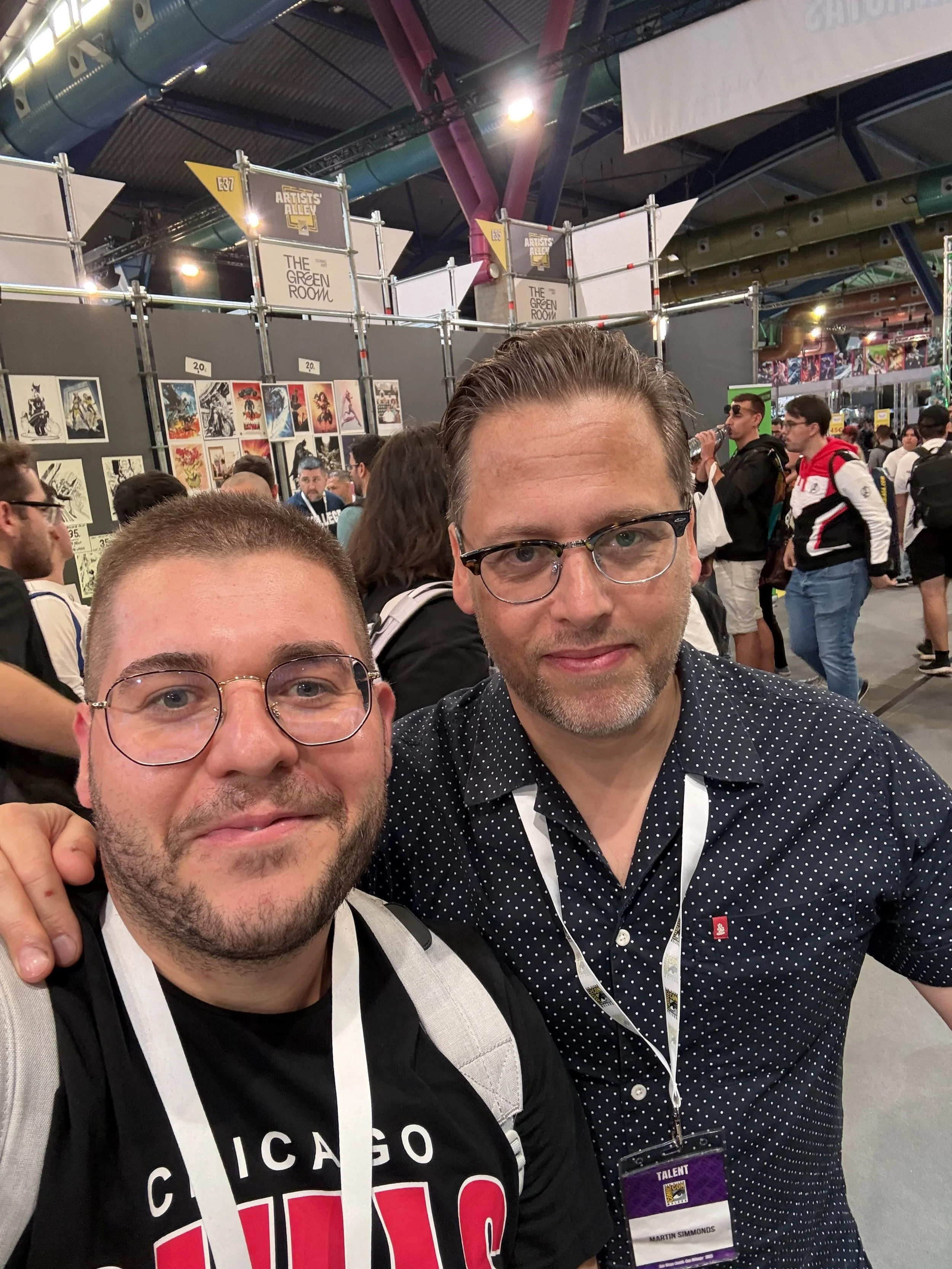
The team of Pages and Panels would like to thank Martin Simmonds for his kindness and availability, and we wish him the best of luck with all his current and future projects.