The Depressed Hunter
Creative Team
writer/artist: MOEBIUS
translator: DIANA SCHUTZ
publisher: Dark Horse Comics
The late Jean Moebius Giraud is one of those artists whose style is so unique, personal, and undeniably European that his works are both instantly recognizable and notoriously hard to define with any degree of accuracy.
A naturally talented and accomplished artist from a very early age, throughout his life Moebius created legendary works of comic book art such as Incal, Edena, and The Airtight Garage (generally considered to be Moebius' masterpiece, as it anchors and frames many characters and narrative threads) and Blueberry series, among many other classic works.
He worked with film directors such as Ridley Scott and Alejandro Jodorowsky and contributed to classic magazines like Metal Hurlant (and its American spin-off, Heavy Metal) and Spirou throughout the 70s and 80s. He even collaborated with comic book extraordinaire Stan Lee in 1988 to create a Silver Surfer graphic novel (Silver Surfer: Parable).
In 2008, just four short years before his untimely death, Moebius published the first French edition of Le chasseur déprime, a title whose literal translation is The Hunter is Depressed. This book acted as a prequel to The Major, published by Dark Horse Books as the collected edition Moebius Library: The Major in 2024.
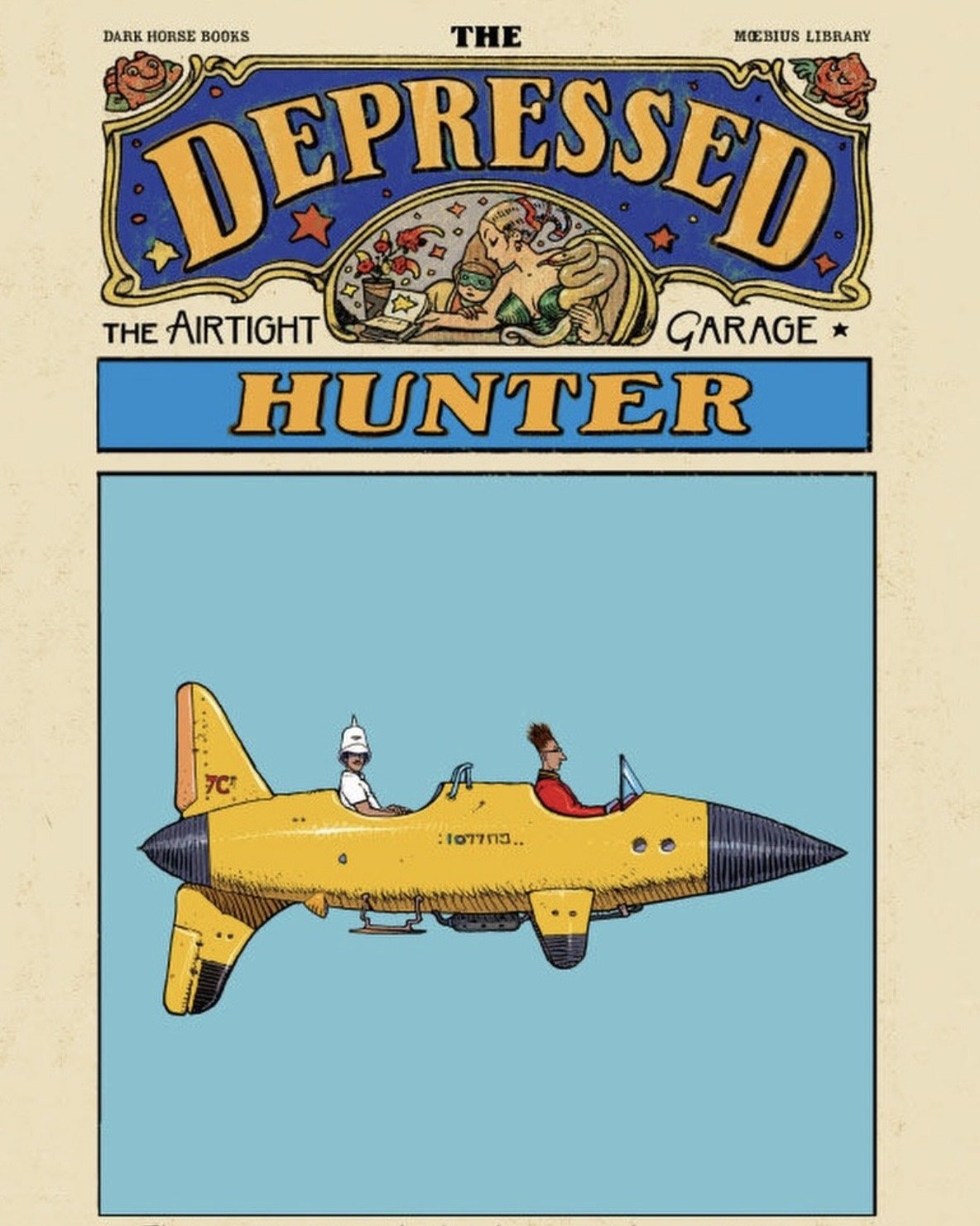
What we have here is a new edition by Dark Horse Books based on the second French edition, published in 2022. The title has been slightly adjusted to The Depressed Hunter.
The story centers around Major Grubert–a recurrent character in Moebius' work–who travels to the Airtight Garage (a ‘pocket universe’ created by the Major himself) to unwind and relax, hoping to see his depressive state lift. But instead of finding the relaxation he needs, he runs into some locals whom he overhears plotting his assassination. The plan has a fatal flaw, though; the plotters' only photograph of the Major is one without a moustache. Since he now has one, the Major calculates that he can infiltrate the group incognito and find out why he's a target. What follows is a surreal journey through the Major's deepest layer of consciousness, his dreams, and his nightmares, as he tries to find the truth about who's behind the assassination plot.
The Depressed Hunter is entirely inked in black and white and drawn in that inimitably intricate, crisp-lined, patterned style that's Moebius' trademark.
Most works by the French artist require multiple viewings and readings to fully understand and appreciate the vast amount of detail on display, and The Depressed Hunter is no exception. From sprawling cityscapes and crowded streets and alleyways to pictorial representations of dreams and nightmares, the art is vivid, nuanced, and fascinating to explore and dive into. His use of space and angular geometry is second to none. The reader will spot something new, some new detail or feature, every time they revisit this book. This endless re-readability is classic Moebius through and through.
I, being of a certain vintage, have been a long-time fan of Moebius' work. He was a cultural icon in Europe, where I hail from. And though Marvel was instrumental in introducing him to American audiences through his work in Silver Surfer, Moebius would today be scarcely known outside industry circles and comic book aficionados. The Depressed Hunter offers the perfect opportunity to rediscover this Frenchman's innate talent and unique style.
While reading The depressed hunter, I couldn't help but think of the 1997 sci-fi film The Fifth Element, directed by Luc Besson. And for good reason. Moebius worked as concept artist and production designer in it, and you can truly see how his art helped shape The Fifth Element's overall European feel and visual style.
Moebius is one of those few artists whose craft the audience will better appreciate and understand the more they explore it and the longer they spend poring through every detail on the panels. The rewards are there.
Jean Moebius Giraud passed away on March 12, 2012, aged 73, after a long battle with cancer. Though he's gone forever, his art endures and remains culturally relevant and influential worldwide.