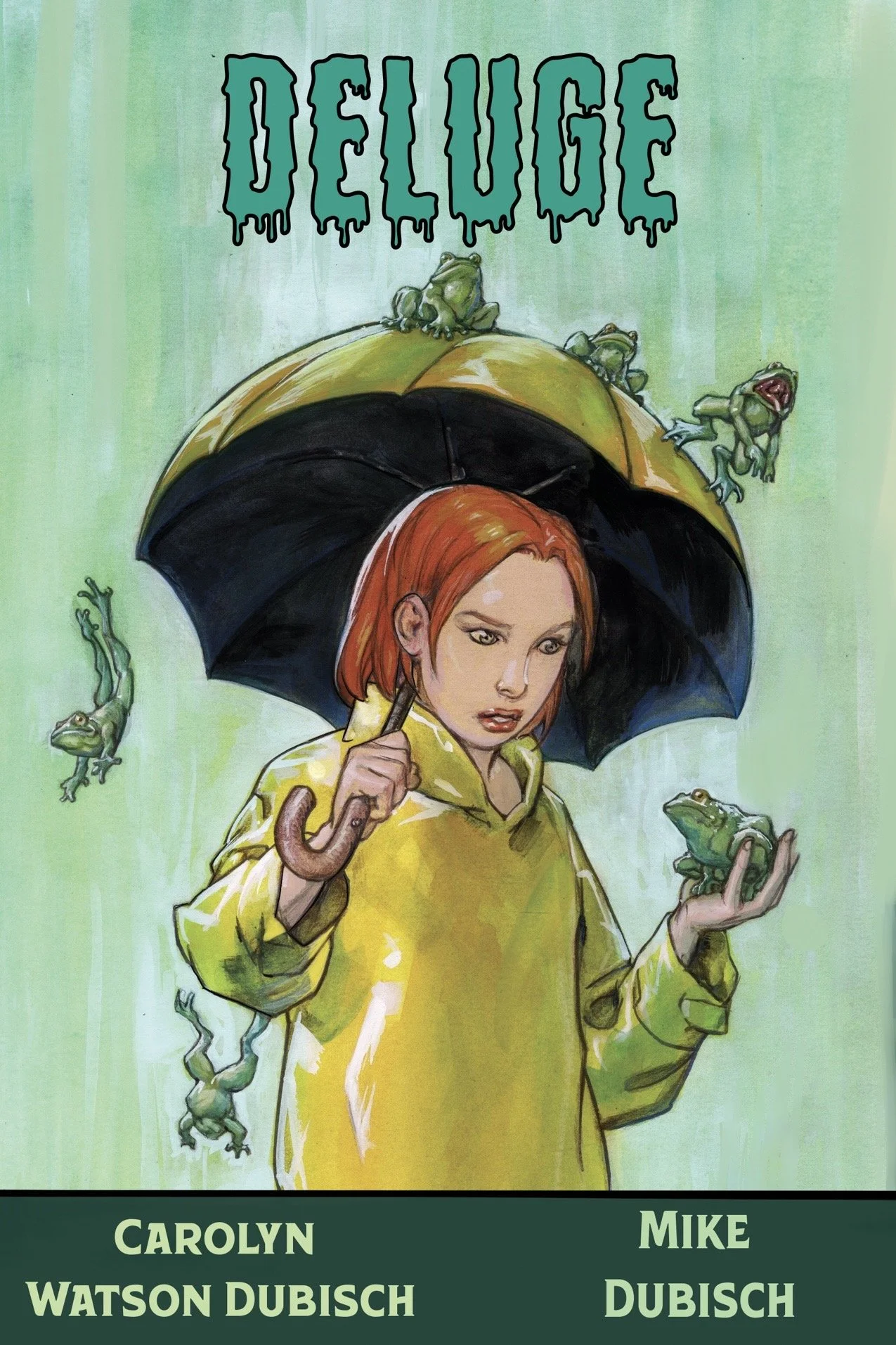
Deluge: The People That Melt in the Rain #1
Creative Team
creators: CAROLYN WATSON-DUBISCH and MIKE DUBISCH
publisher: SELF PUBLISHED
A child’s life can feel restrained at times, stuck behind bars of change they have no control over. Escaping that reality can take many forms, but one of the most universal is the magic of childhood imagination. Carolyn Watson-Dubisch and Mike Dubisch’s Deluge: The People Who Melt in the Rain is a melancholic snapshot of those years, blending magical realism with the slow-burn atmosphere of small-town America.
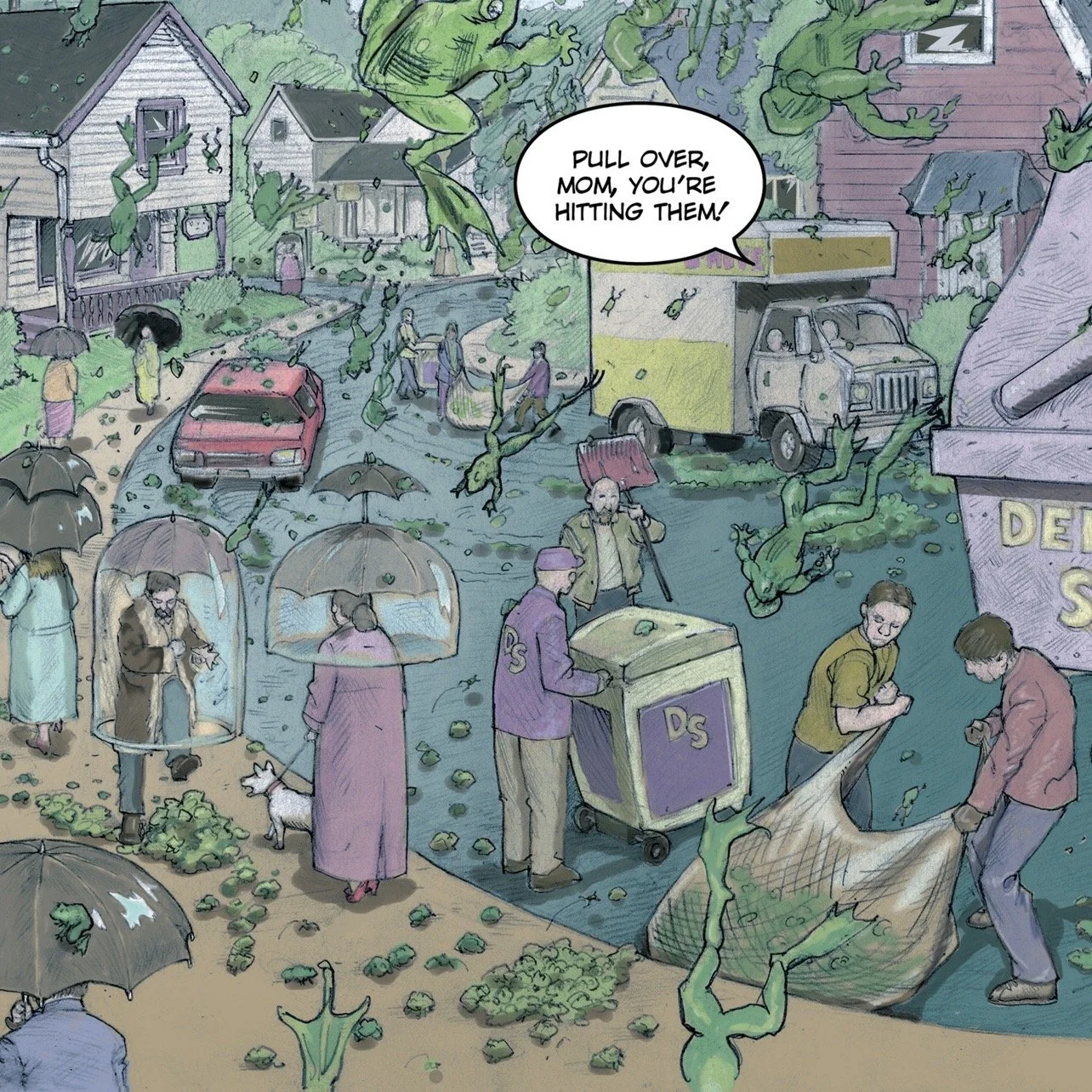
Set in the town of Deluge, the story follows twelve-year-old Laura, a girl uprooted from her old life and forced to settle into a strange community cursed so that none of its residents can ever leave. However, what makes Deluge compelling is how utterly normal its inhabitants find the bizarre. Frogs fall from the sky, paintings come to life, and impossible events occur with such regularity that the townspeople have long since accepted them as part of daily existence.
Deluge is admittedly rock simple. The writing leaves much of its characters and plotting on the surface, but that simplicity becomes one of the book’s greatest strengths. Laura’s emotional conflict about starting over is never overcomplicated, yet it effectively grounds her fascination with the town’s curse. While the adults and longtime residents have become numb to the whimsy surrounding them, Laura still sees wonder in every strange occurrence. Her grief and uncertainty transform Deluge’s magical realism into a form of escapism, making each odd encounter feel deeply personal for her.
What separates the story from more conventional children’s fantasy narratives is its restraint. Laura never dives headfirst into some sprawling magical world in the way stories like The Lion, the Witch and the Wardrobe might. Instead, she experiences Deluge one day at a time, stumbling into strange events that are treated as casually as the sunset. That grounded approach gives the story a subtle maturity while remaining emotionally digestible for younger readers. It’s the kind of narrative that invites readers to project their own childhood memories onto it rather than getting lost in overly intricate lore or character arcs.
The supporting cast follows a similar philosophy. Everyone in Deluge is written one step beneath the surface, rich with personality, but never characterized with excessive specificity. For a story aimed at younger audiences, this works beautifully. The familiarity of the town and its people allows readers to find emotional truth in the impressionist writing, rather than in the mechanics of “complex” characterization.
What truly drives the imaginative nature of the story home is Mike Dubisch’s artwork. His sketchy, almost hazy approach to cartooning leaves every character feeling slightly out of focus, as though the entire story exists inside a half-remembered childhood memory. The soft pastel coloring reinforces that sensation, washing the town in warmth and nostalgia while subtly shifting tones whenever Laura’s sadness and uncertainty begin to surface. Color becomes an emotional translator for her state of mind, growing gentler and more inviting as she slowly becomes comfortable with her new life.
The panel-to-panel flow is equally impressive. Dubisch’s compositions guide the eye effortlessly, with many sequences communicating emotion and atmosphere so effectively that dialogue often feels unnecessary. Every page feels carefully storyboarded, each thumbnail packed with enough visual information to carry the narrative momentum on its own.
Where the book stumbles most is in its lettering. The panel composition itself is strong, but the placement of speech bubbles and text boxes often feels disconnected from the artwork beneath them. Rather than integrating naturally into the page, the dialogue can feel layered on top of the imagery, occasionally pulling the reader’s eye away from the intended flow of the panels. At times, it creates the sensation of reading two competing visual rhythms simultaneously: one dictated by the artwork and another by the text placement. The font itself also suffers from some inconsistency in sizing and spacing, which further disrupts an otherwise immersive visual experience.
Still, those issues do little to diminish what makes Deluge: The People Who Melt in the Rain so enchanting. Beneath its magical realism and small-town oddities is a deeply earnest story about childhood uncertainty and the quiet ways imagination helps people adapt to change. It’s melancholic without becoming cynical, whimsical without losing emotional sincerity, and visually distinct enough to linger in your mind long after turning its final page.