Mary Sue
Creative Team
Writer: Meghan Fitzmartin
Artist: Lisa Sterle
Colorist: Heather Breckel & Dearbhla Kelly
Letterer: Jodie Troutman
Publisher: BOOM! Studios/Boom Bo
Imagine your inner teenage self enters reality…and then you two get in a fight.
Endearing, comedic and surprisingly complex for a younger audience, Mary Sue from BOOM! Studios’ BoomBox imprint tackles this and questions like: Who among us hasn’t wanted to be a part of their favorite story?
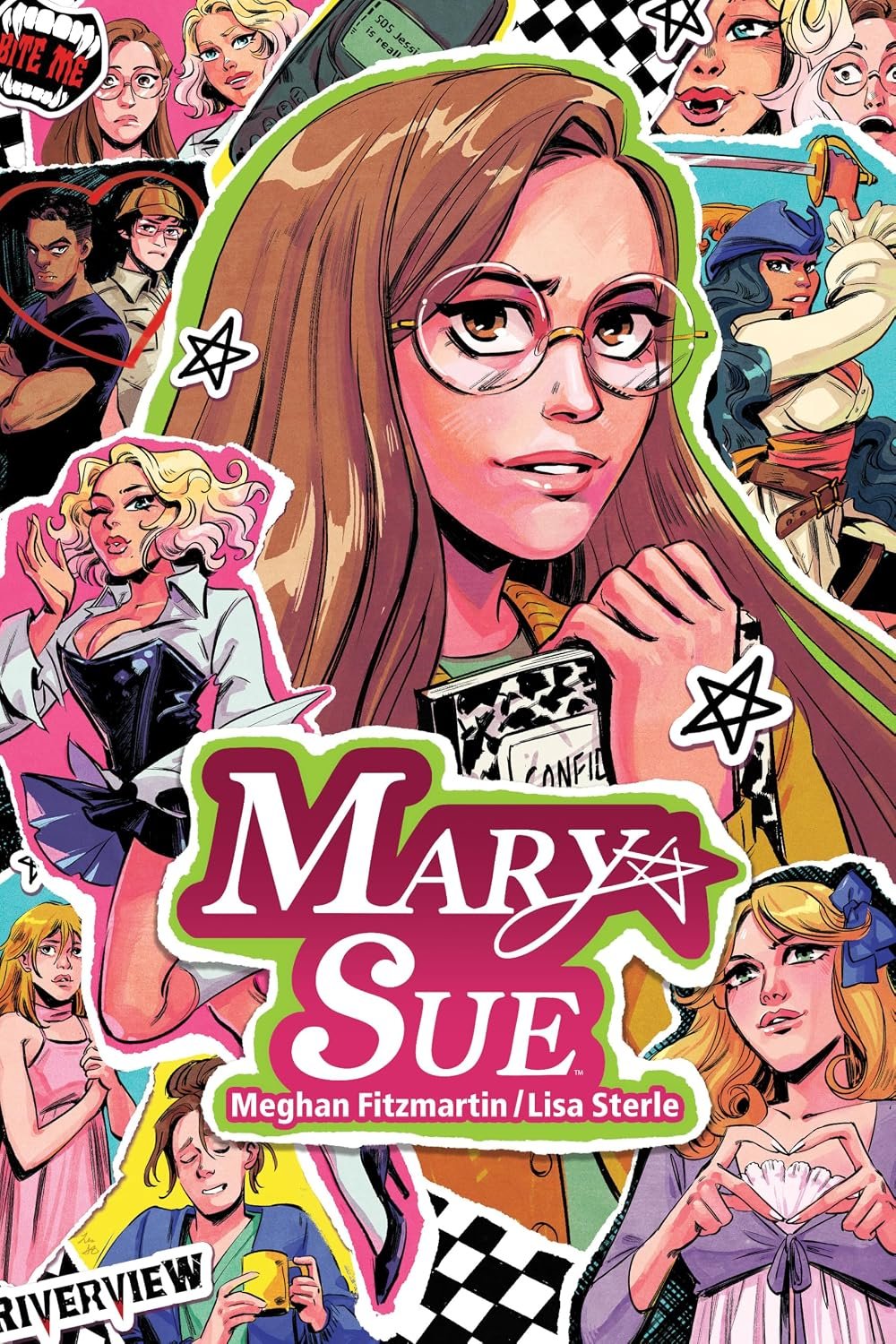
Written by Meghan Fitzmartin, with art by Lisa Sterle, colored by Dearbhla Kelly, Heather Breckel, and lettered by Jodie Troutman, “Mary Sue” is a letter of endearing endorsement to fandoms and fanfics, taking place in the world of chronically online teen Cassie and her come-to-life ‘Mary Sue’ character Jessica.
Shy, awkward and somewhat isolated in her real life, Cassie’s near-perfect original character Jessica has a dedicated online following. After a conflict with Cassie’s former best friend Bennett, Jessica steps out of the story and into Cassie’s real life.
Jessica “has never been bad at anything” in her life, except–the real world doesn’t love a Mary Sue character. When Bennett’s original character London arrives on the scene, things get out of hand and the former friends have to work together and enter ‘Mary Sue world’ to figure out how to return their OC’s to their proper place…and maybe fix their friendship.
Fitzmartin’s writing builds a deeply relatable world of teenage fandom awkwardness. Rather than pushing the Mary Sue trope on the reader, this lovingly self-aware read leads the audience hand-in-hand through the honest merits of fanfiction and Mary Sue characters. Fitzmartin takes a stand for them, explaining the history and value of these oft-maligned topics, speaking up for young fans who have ever imagined themselves in a better world, albeit one they created alongside their personal favorite media.
Sterle’s art fills this teenage world with plenty of Easter egg references to overt and niche fandoms that will have readers pointing at pages, laughing and feeling deeply seen. Readers are pulled through this story with neatly executed pressure in panels, creating emotional tension with tightness, and loneliness and defeat with open space. Sterle zeroes in on the visible emotions and expressions of teenage angst and frustration. Each character is distinct, but relatable, and the visual worldbuilding is fun and familiar yet new, with sincere homages to fandom culture.
Dearbhla Kelly and Heather Breckel’s coloring adds a touch of Lisa Frank-esque vibrance to this world, building on not just moods, but also nostalgia. The color schemes build the moods of each issue’s plot without feeling disjointed or disconnected, succeeding in offering a moment of vivid awe when entering Mary Sue world, a soft delineation when viewing the past, and richly pigmented action moments that draw readers in.
Making lettering into a distinct part of the story has hurdles and Troutman clears them. Unique coloring, styling and font choices in this book’s lettering add clear voices without risking losing the reader, but also adding to the visual pace of the page. Right from the start, Troutman captures the chaotic, relatable reality of two-screen show-watching with friends in a chat.
It would be easy to make this story a little too perfect, but it embraces the camp of the trope with plenty of intentional whomp whomp moments.
While the topic of a ‘Mary Sue’ character gets lambasted in real life, this comic provides a safe space to mutually laugh at some of the tropes, but also get closer to the kind of human vulnerability that backs fan fiction.
This is an excellent read for anyone who has ever inserted themselves into the world of something they love. It grapples with who you are and who you want to be, your most idealized self and what it takes to push your own boundaries.