D’Orc Vol. 1
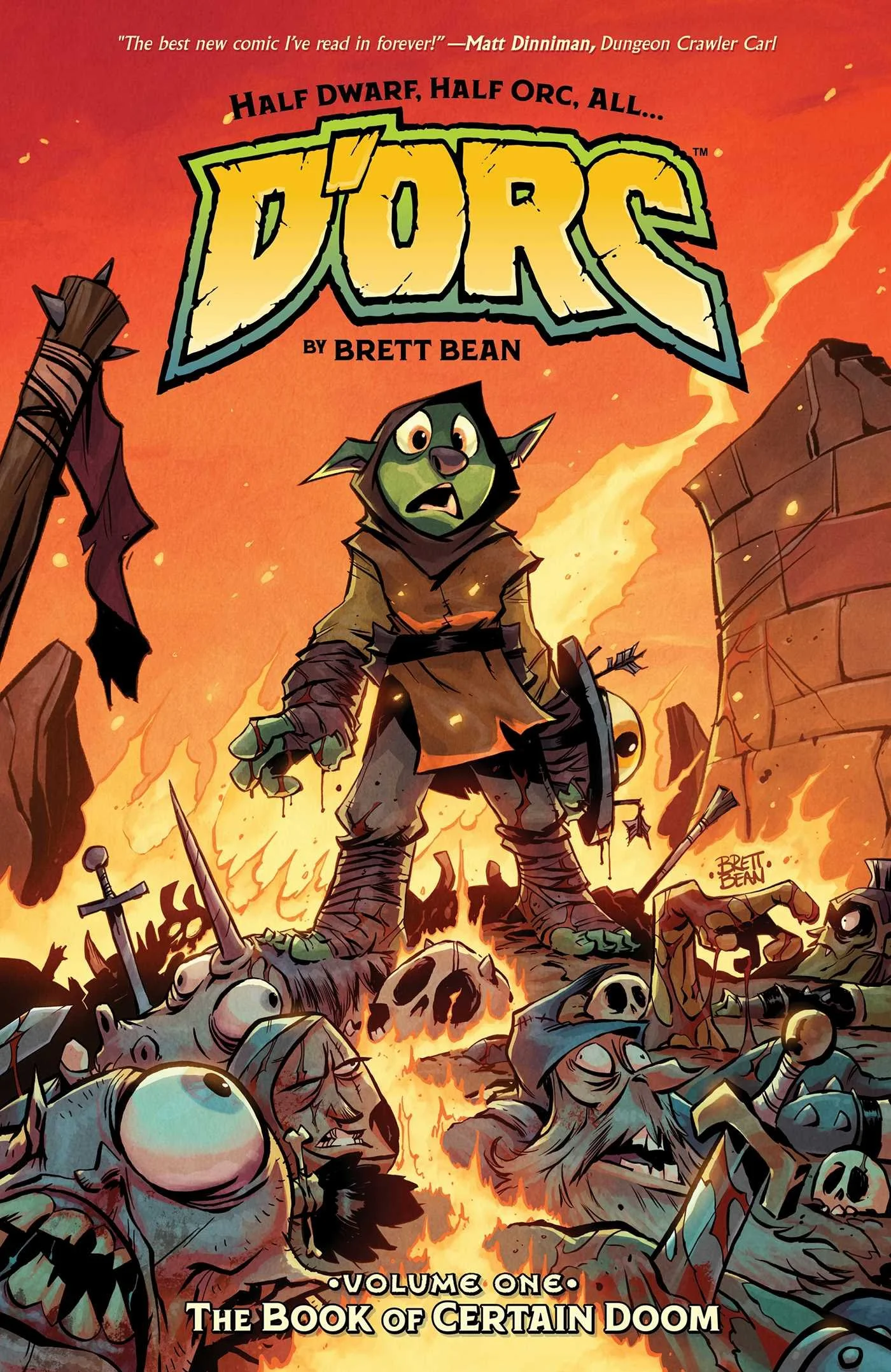
Creative Team
Writer/Artist: Brett Bean
Colourist: Jean-Francois Beaulieu
Letterer: Nate Piekos
Publisher: Image Comics
Since time-immemorial human hands have scratched, jotted or inked a story on stones, pages and screens; the story of good versus evil, of light versus dark. The triumph of our moralistic virtues over the depravity and anarchy of our animal nature. But what if neither side can hide their obsessive need to triumph over the other, and will go to any lengths to do so. Well one creature is exploring a world of such a kind, and his name is D’orc.
D’Orcs creative team hardly needs an introduction, artist and author Brett Bean, colourist Jean-Francois Beaulieu, and letterer Nate Piekos are all industry veterans with a veritable shedload of accolades between them. The experience of the team makes D’Orc one of the best looking comics in recent memory. So good looking in fact that it managed to make scalpers actually think re-selling comics was still a viable business model.
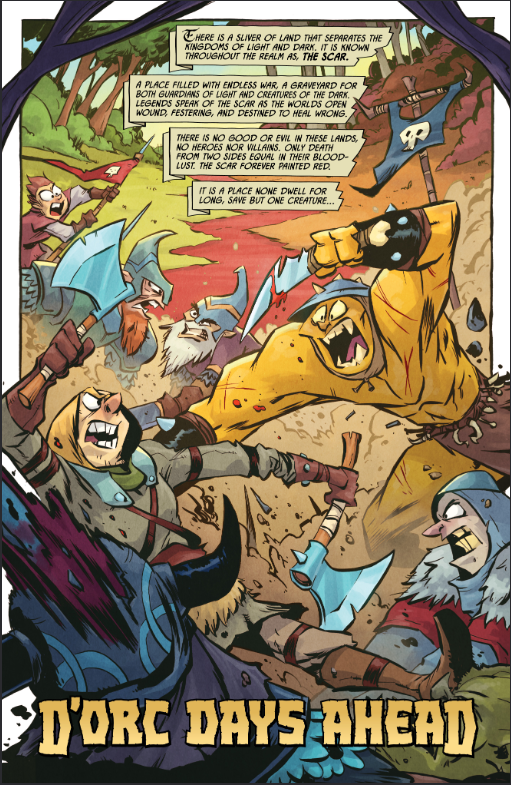
Opening the first pages of D’Orc, you are treated to a sight anyone who has any interest in fantasy is always happy to see, a map. A beautifully drawn one at that as well. You get a great splash page explaining the world you’re currently in, and a speedy introduction to the titular character. All is going well, you think to yourself, you snug your chin into your smoking jacket, swirl mahogany stained whiskey and sink deep into your leather chair. Two speech bubbles later there is a fart joke, and you are immediately aware of the type of story you’re in for.
D’Orc has so much going for it, a fantastic world, some of the best artwork and colours seen in recent comic books and creature designs that would make Jim Henson feel like Paul McCartney listening to “Pet Sounds” for the first time. But D’Orc’s downfall comes from some incredibly bog standard humour, one or two lines may get a chuckle out of someone old enough to get that McCartney joke, but little more than that. Perhaps then, you would say that D’Orc is aimed at children. But the amount of blood and viscera exploding from pretty much every panel says otherwise.
D’Orc really struggles to find a solid middle ground, the artwork and topics broached would have you believe this is a story for a slightly more mature audience. But the humour is like watching a father practice his stand-up at his daughters sleepover, it just bombs. D’Orc tries its best to marry light humour and dark themes together, but like the forces in the book, the two can just never get along.
This is not to say that you aren’t going to have a good time with D’Orc, certainly Bean, Beaulieu and Piekos did and you can see that in the pages. D’Orc screams, “we had a fantastic time making this”, and it genuinely is a joy to watch play out. Within the first five issues there are even heartfelt moments that you wish went on a little longer, because, when D’Orc does decide to more deeply explore its darker themes, it manages to do so in such an earnest way. D’Orc himself is a great depiction of a young man who has nobody to ask why the world is the way it is, he has nobody to help him understand the anger he feels at the nonsensicalness of it all – “I’m afraid of this rage inside me. This world shows off its worst sides, and I want to help it and hurt it all the same.” – more of this please.
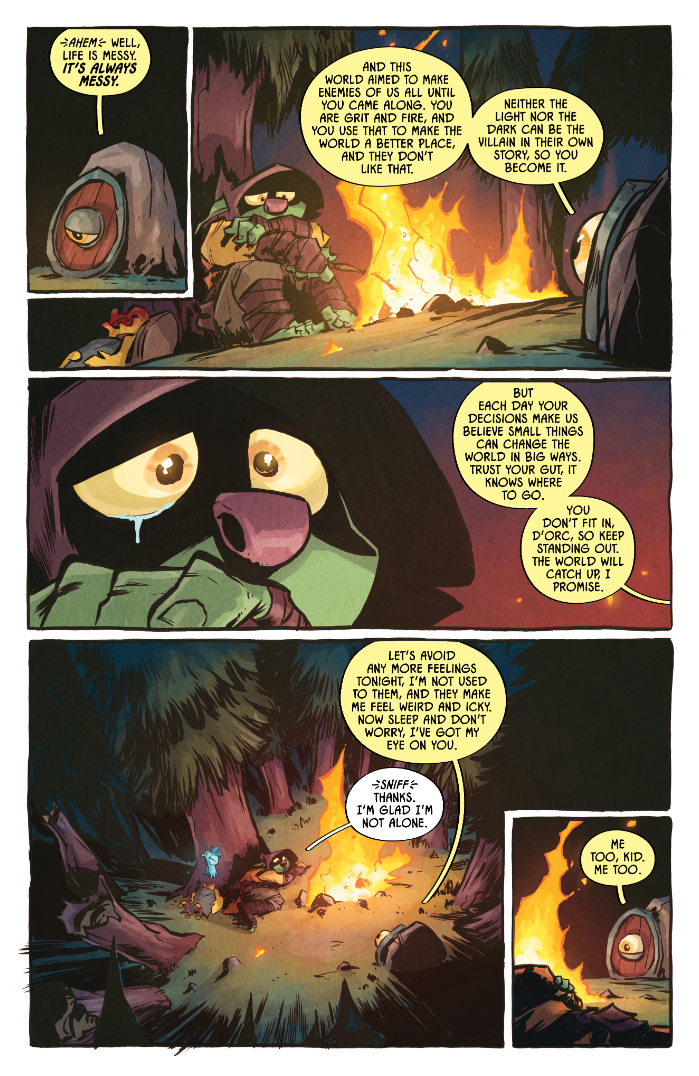
Bean and Beaulieu are, artistically, a match made in heaven. D’Orc is so alive with movement and colour, and when you add Piekos’ super stylish lettering you get this wonderfully complete comic book, nothing more nothing less. D’Orc, visually, is a breathtaking piece of work at some points. But it all feels a little style over substance.
Ideally, D’Orc will be a comic book that a parent buys for their younger child, perhaps the bright colour palette lures them in like moth to flame. You can imagine said child, on a school night, saying goodnight to their blissfully unaware parents, before closing their eyes for a few moments. After making a few failed grasps in the dark to pull the book out from under their pillow, they will eventually succeed. Nightlight on, they will indulge, for longer than they should, in a world foreign and not made for them, and hopefully, like D’Orc, feel the unmistakable freedom of doing something they should not. That is exactly what this book is made for, and frankly, it’s perfect for it.
D’Orc struggles a lot to find its footing, and unfortunately it never quite does. Like the titular character, it is in a constant identity crisis, between being a harsh and dark satirisation of the modern world, and a jester who is one more fart joke away from being summarily executed. But what cannot be taken away is how fantastic it looks and the vivid imaginations that brought the world of D’Orc to life. Perhaps, with time, D’Orc will find a place to belong and you can’t help but hope that he does.
Final Verdict: Add to TBR