Work-Life Balance
Creative Team
writer: WAYNE RÉE
illustrator: BENJAMIN CHEE
letterer: SARA LINSLEY
publisher: DIFFERENCE ENGINE
Exactly, how would the things of nightmares maintain their sense of identity and self…when working in corporate? The power of friendship, maybe? Or perhaps, revolution?
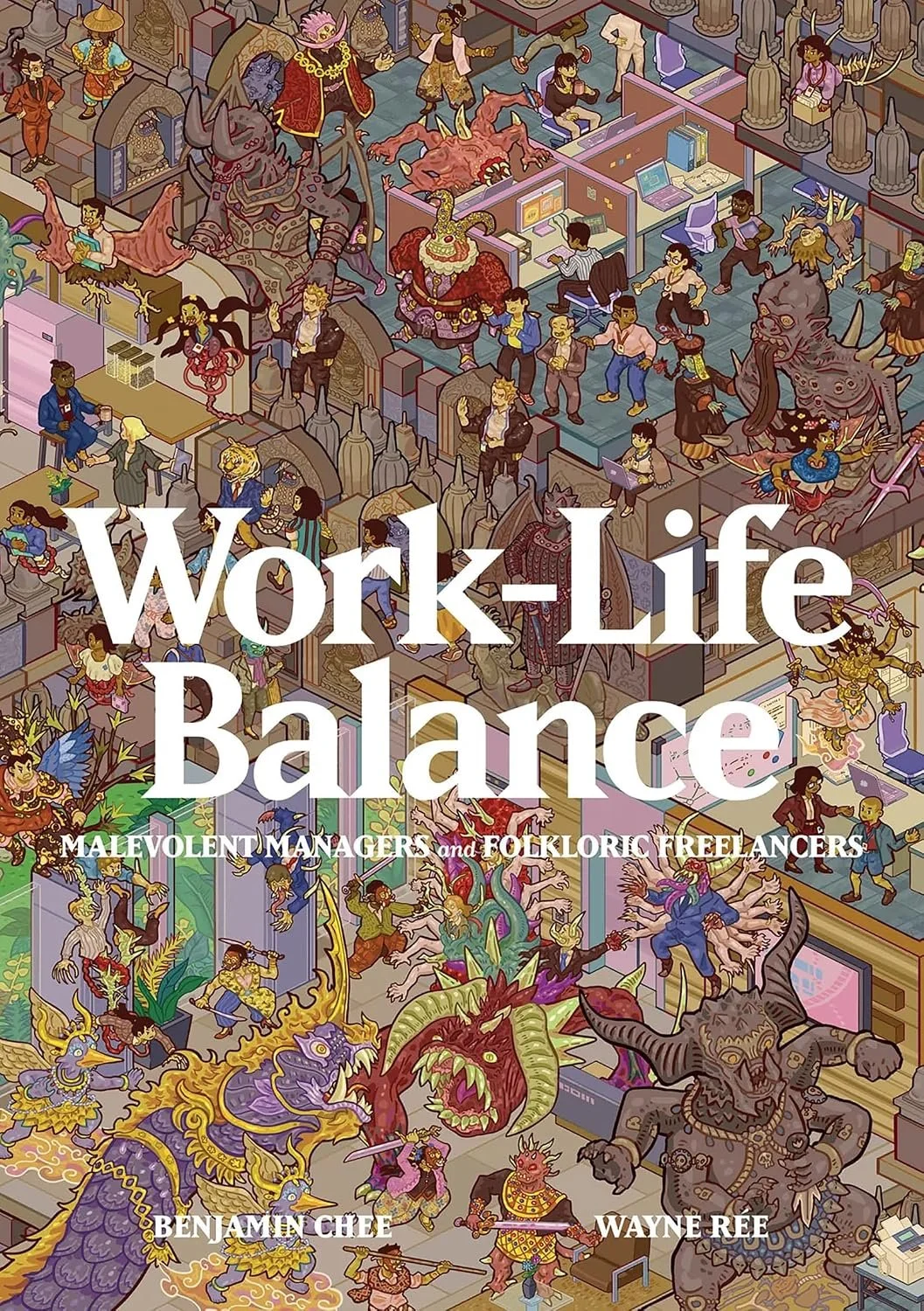
Work-Life Balance is a graphic novel from writer Wayne Rée, illustrated by Benjamin Chee, with a dialogue font designed by Sara Linsley, published by Difference Engine. It takes an approachable, loving look at the day-to-day lives of spirits and ‘monsters’ in Asian folklore as they navigate the complex issues of identity, community and maintaining a sense of purpose against a backdrop of corporate–a form of new colonialism.
Winner of Book of the Year and Best Literary Work at the 2023 Singapore Book Awards and shortlisted for the 2024 Singapore Literature Prize in Comics/Graphic Novel, it’s styled like a collection of tales, as a prose plus comic narrative that switches between short story chapters and sequential pages in a dynamic structure.
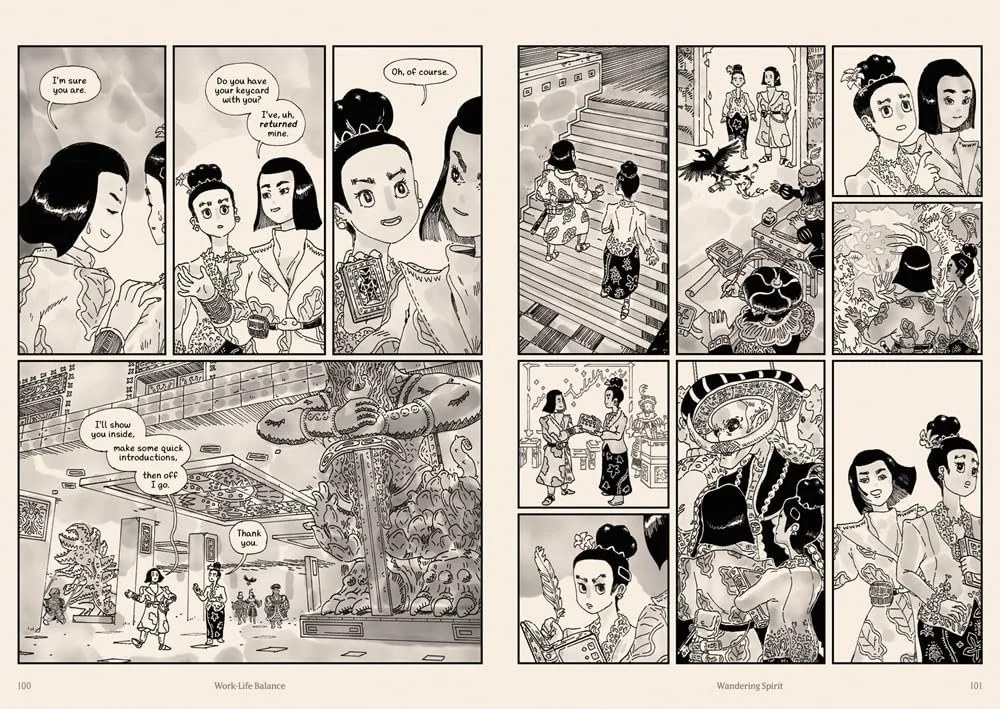
Readers are introduced to each spirit as a personal, individual character starting with their story narratives in longer form, with Rée building deeply relatable internal conflicts, questions and frustrations for this cast of characters, all paired with Chee’s deeply active action comic pages rendered in an illustration style that pulls you into every corner of the page, but still maintaining a cheerful, evocative nod to classic tales and storybook styling.
While it looks light and reads in a quiet, straightforward tempo, this collection of tales deftly confronts what it means to lose yourself to a job, the loneliness of middle management. the daily wrestling with finding a sense of purpose–all while feeling adrift in a world that runs on deliverables and deadlines, deeply hoping you get the one sandwich you like the most on your lunch break.
There are workplace cliques. There are bad managers.
There’s a resignation. And ghostly side gigs.
There’s a vengeful spirit, who’s sporting a chic bob.
And an errant key card that can tip the balance of ‘good’ and evil (and we’re cheering for the not-bad bad guys, all the way).
It is a deeply endearing, humanizing take on corporate hell from mythological mindsets.
Set mainly in Singapore, the storyline follows a group of traditional folklore monsters (pontianaks, manananggals, rākṣasīs and ba jiao guis) and their human friend who start off together, providing their services and scaring the unwary in their village outside the city. One day, a new type of demon (resembling the ravenous forms of European conquistadors) approaches their home, offering promises of a profitable place to apply their skills and be cared for.
Trading banana tree hiding spots and the summons of wronged villagers for a high-rise office in Singapore, each creature or spirit has shifted from the purpose of their folklore (frequently dispatching poorly behaved men) to a functional office role in The Company.
Wings get tucked into blazers; claws get put to work.
Some succeed at work, while some moonlight as their former selves - trying to sustain a connection with a personal sense of meaning. Feelings of frustration, isolation and a loss of purpose plague each of the creatures until they band together with the common goal to rid themselves of the real monster–The Company.
While wooden ships, flags and armor sink, international corporate shows up on global shores clad in a suit and schilling a structure that tamps down identity to the size of a cubicle.
It would be so easy to take a cynical approach to a story about going corporate, but Rée and Chee make it fun, disarming and deeply relatable. Together they’ve created an accessible take on what it means to hold on to your own tale, rediscovering your identity, community and culture all in the face of corporate colonialism.
Final Verdict: Add to TBR
Helpful Terminology for the Spirits mentioned in this book:
Pontianak: A Malay folklore creature that is vampire-like, believed to be the vengeful ghost of a woman who died in pregnancy or childbirth. (paraphrased from JSTOR)
Kuchisake-onna: A Japanese ghost of a woman who was mutilated and returns to seek vengeance on the world, most often depicted as a woman whose mouth is slit at the corners. (paraphrased from yokai.com)
Mephistopheles: A demon in German folklore, best known as originating in Faust, a dealer of contracts and tricks.
Manananggal: A Philippine creature who is a pretty woman by day that transforms into a vicious, half-bodied, viscera-eating monster by nightfall. The upper body detaches from the lower body and flies around. (paraphrased from The Aswang Project)
Rākṣasīs: A monster from Hindu mythology that can shapeshift and transform into strikingly beautiful women to seduce or destroy their enemies. In mythology, Rākṣasīs are frequently depicted with an insatiable hunger for human flesh and the power to change their shape at will. (paraphrased from Encyclopedia Britannica)
Ba Jiao Gui: A female ghost in Chinese mythology bound to a banana tree who weeps beneath it at night and, when tormented into it, surrenders winning lottery numbers in exchange for her release, a cautionary spirit of greed and broken promises, rewarding those who bargain with her and killing those who cheat her. (paraphrased from GodsandMonsters.info)
Jiang Shi: A type of Chinese vampiric monster, a “stiff body” corpse creature. Jiangshi were believed to once be people who died in a violent or unnatural way, or whose soul did not find rest at the time of death. (paraphrased from maayot.com)
Shui Gui: Chinese water ghosts, or the spirits of the people who drowned. (paraphrased from China-Underground.com)