Black Ties: In Gods We Trust
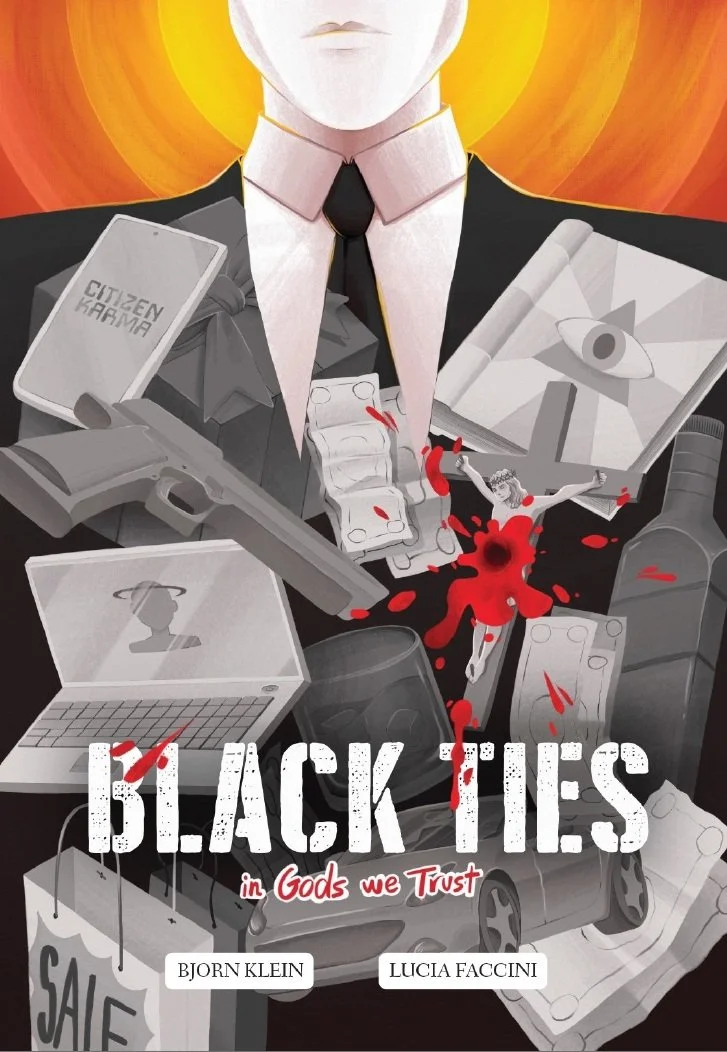
Creative Team
writer: BJORN KLEIN
illustrator: LUCIA FACCINI
publisher: SELF PUBLISHED
Review written by C.K. Stewart
Gods are real, and they control the government. Bjorn Klein’s debut graphic novel with illustrator Lucia Faccini is a clever satirical look at politics, consumerism, and the way faith can shape and is shaped by both.
Minor god Eldur Vanstone has been toiling in service of the Orthodox Traditionalist Party as a Senator for centuries at the expense of his career, his marriage, and his relationship with his daughter. When the seemingly more forward-thinking Divine Modernist Party offers him an opportunity to help reshape human faith and protect millions of gods whose existence relies on believers, it seems like the perfect opportunity for a fresh start – until Eldur finds himself embroiled in a cynical scheme to surveil and manipulate countless mortals to further expand the DMP’s newfound power.
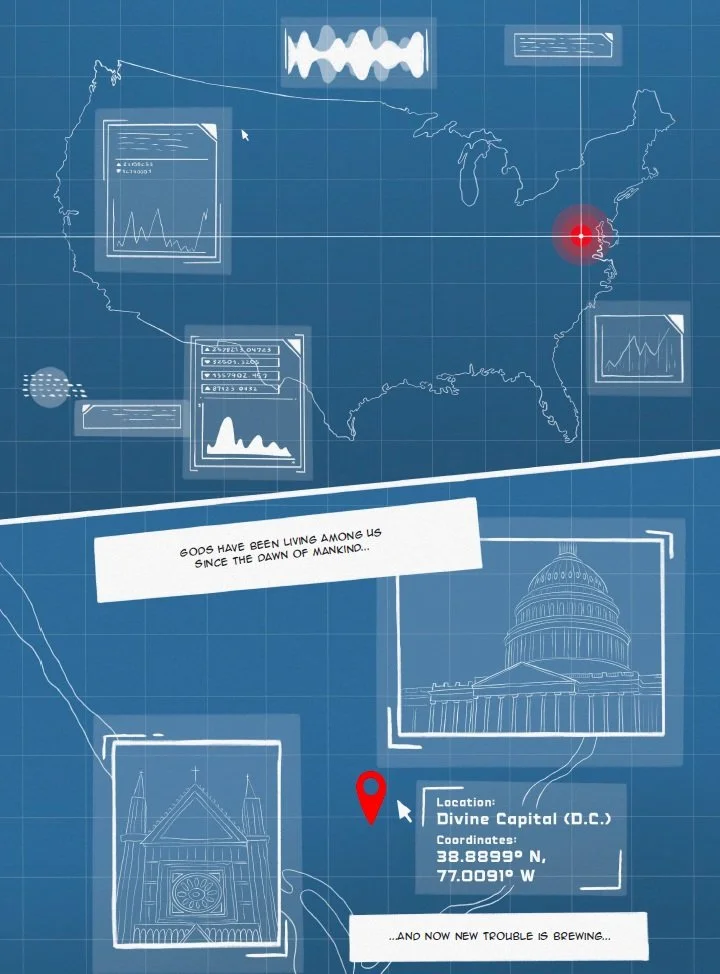
Klein drops readers in media res, joining Eldur right after he takes a dangerous career risk by cutting ties with the Orthodox Traditionalist Party over their failure to tackle the crisis of a rapidly dwindling number of mortal believers, and right after his wife admits that his centuries-long commitment to the Party has left her feeling undervalued and desperate for a divorce. Eldur is a compelling protagonist: a career politician who’s convinced he serves the greater good, blind to his own foibles and the impact they have on those around him.
The moments we see Eldur with his family are some of the most captivating in the book. When he returns to Washington D.C. (the Divine Capitol) some months later for a visit with his daughter, Klein and Faccini deliver an incredibly sweet, emotional moment that reveals the capacity for kindness and care that drives Eldur to eventually take on the DMP’s scheming head-on, at great risk to himself, while attempting to guarantee his family’s safety.

The tale does lack some focus, which takes a bit of punch out of the consumerist and political critique–there are strong moments, like a panel of a perfectly-styled Saint Barbie statue that drives home the DMP’s pivot from filling pews to filing shopping carts–but we don’t learn enough about the structure and influence of the Godly Senate and government to understand what Eldur is working towards or against, and only get broad strokes of how the DMP is attempting to influence mortals but not whether mortals have any strong feelings about it or feel their influence. It’s dense with exposition and dialogue at times, though Faccini’s lettering keeps it easy to read.
Eldur’s wife, Niamh, isn’t specified to be a divine figure; seeing the DMP’s influence play out over time through watching Niamh or their daughter Ash fall prey to the predatory mobile app the DMP develops to gather data and target ads for even more effective worship-at-the-market could have given the tale more focus and stronger, more personal stakes.
But it’s a fascinating concept, with some compelling characters that Faccini’s art elevates with their expressiveness, even the literal blank slate of Congressman Black, a figure so vacant he dies and is resurrected to no outside notice. Faccini’s colors are muted but not bland; they make the world feel more grounded and real, adding to the insidious banality of evil Eldur has to buck against as the story unfolds. There are great moments throughout, and Klein and Faccini are both creators to watch in the future.