Reflecting on The Walking Dead
Imagine waking up in a hospital bed and discovering that the human race has been almost wiped out by a virus that turns people into zombies. Society has collapsed, and the few survivors have fled the major cities, abandoning them to the apocalypse. The laws and institutions that once formed the foundation of civilization no longer matter. The only thing that counts is staying alive for as long as possible.
But the dead are everywhere. If you get bitten, you become one of them. If you die, you become one of them.
This is The Walking Dead, the comic book series written by Robert Kirkman, Tony Moore and Charlie Adlard, that redefined the modern zombie genre and became the most successful zombie comic of all time.
October 2003
When the first issue of The Walking Dead hit comic book stores in October 2003, Robert Kirkman was hardly an overnight success. At just 24 years old, he was already one of the busiest and most prolific writers in independent comics.
That year alone, Kirkman was juggling multiple projects. He was writing Invincible, the superhero series he had launched earlier in 2003 alongside artist Cory Walker. He was also working on Brit and contributing to several other books published by Image Comics. While many creators spend years searching for a breakout hit, Kirkman was rapidly building a reputation as one of the industry's most promising young voices.
Yet among all the projects competing for his attention in 2003, none would prove more important than a black-and-white zombie comic co-created with artist Tony Moore. What began as a modest horror series would eventually grow into one of the most successful independent comics ever published, spawning television shows, video games, novels and countless spin-offs.
In October 2003, however, none of that was guaranteed. The Walking Dead was simply another new comic fighting for space on crowded shelves, created by a writer with big ambitions and a story he was determined to tell.
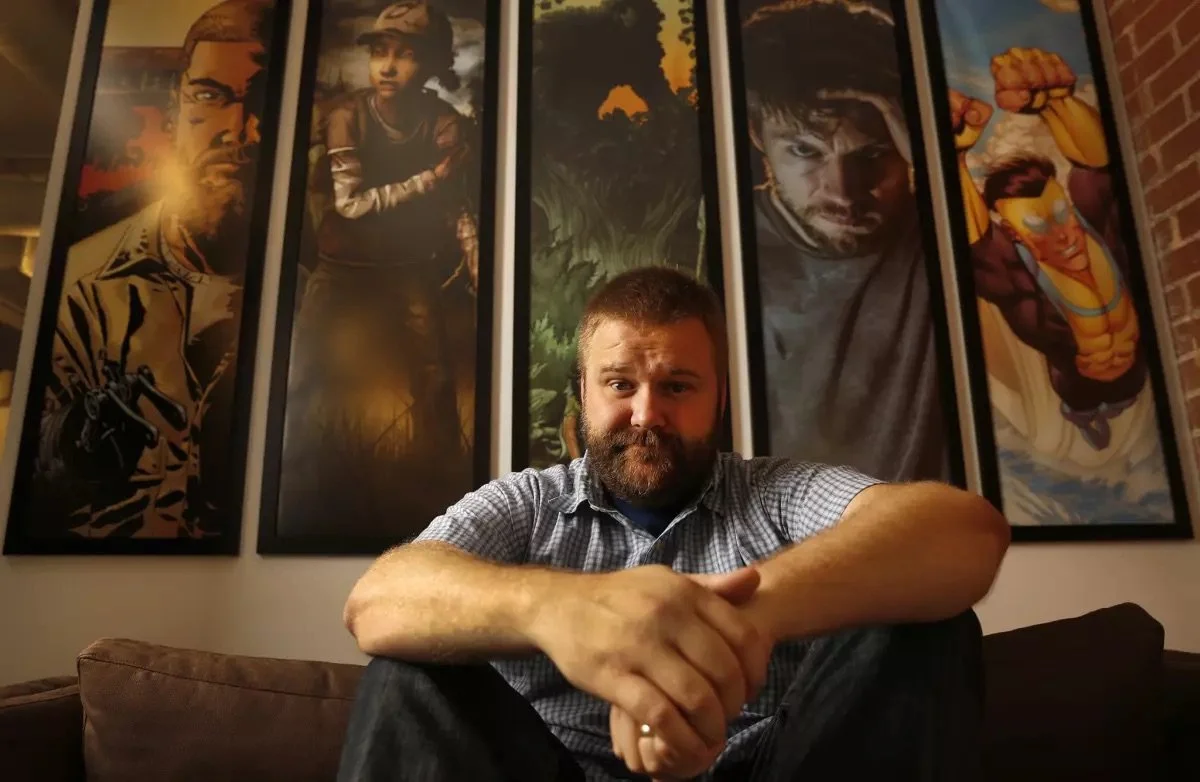
Robert Kirkman, creator of The Walking Dead (credits Al Seib / Los Angeles Times)
Charlie Adlard joins The Walking Dead
Today, it is almost impossible to think of The Walking Dead without picturing the artwork of Charlie Adlard. Yet the British artist from Shrewsbury was not part of the series from the beginning. Adlard joined the book in 2004 with issue #7, replacing Tony Moore, the original artist and co-creator of the series.
While Moore's contribution to the early success of The Walking Dead cannot be overstated, Adlard's arrival marked a defining moment in the comic's history. Over the next 187 issues, he would become the visual architect of Kirkman's post-apocalyptic world, illustrating every issue from #7 through the series finale in #193.
Adlard's artwork brought a different energy to the book. His rougher lines, heavier shadows and grittier aesthetic replaced the cleaner, more cartoon-influenced style of Moore. The result was a visual identity that perfectly matched the bleak tone of the story. Every abandoned road, every decaying walker and every desperate survivor felt grounded in a world that was slowly falling apart.
As The Walking Dead evolved from a promising horror comic into a cultural phenomenon, Adlard's artwork became inseparable from its identity. For many readers, the world of Rick Grimes is the world seen through Charlie Adlard's eyes.

Charlie Adlard (credits BBC)
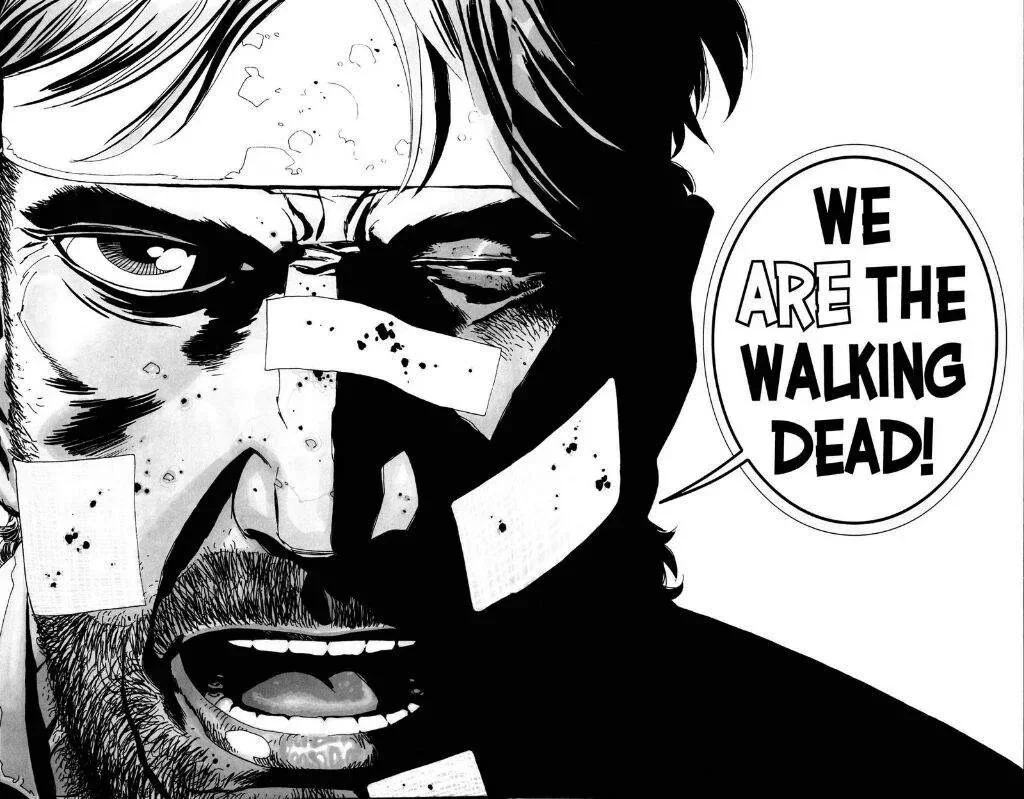
The Walking Dead is not a story about zombies
On the surface, The Walking Dead is a comic book about zombies. Yet that is only the first layer of a much more complex narrative, one that explores people, society and what human beings are capable of when driven by the instinct to survive.
As the series unfolds, it becomes clear that Robert Kirkman uses the zombie apocalypse not as the main focus of the story, but as a narrative device. By stripping away the laws, institutions and comforts of modern civilization, he creates a world where every meal must be earned, every shelter defended and every decision carries life-or-death consequences.
This idea is reinforced throughout the series' many story arcs. Time and time again, the greatest threat is not the walkers roaming the wasteland, but other survivors. Whether motivated by fear, power, desperation or cruelty, people often prove far more dangerous than the dead themselves.
At its core, The Walking Dead is not a story about zombies. It is a story about humanity, and about what remains of it when everything else has been taken away.
Character development
A story as ambitious as The Walking Dead could never succeed without compelling characters. Over the course of 193 issues, Robert Kirkman introduces a vast cast of survivors, each with their own past, fears, hopes and motivations. From Rick Grimes and Carl to Michonne, Andrea and Negan, every character feels like a real person shaped by the harsh realities of the world they inhabit.
What truly sets The Walking Dead apart, however, is the way its characters evolve. The people readers meet in the early issues are rarely the same people they become years later. Loss, violence and the constant struggle for survival leave lasting scars, forcing characters to adapt or perish. Some rise to become leaders, while others succumb to fear, grief or the desire for power.
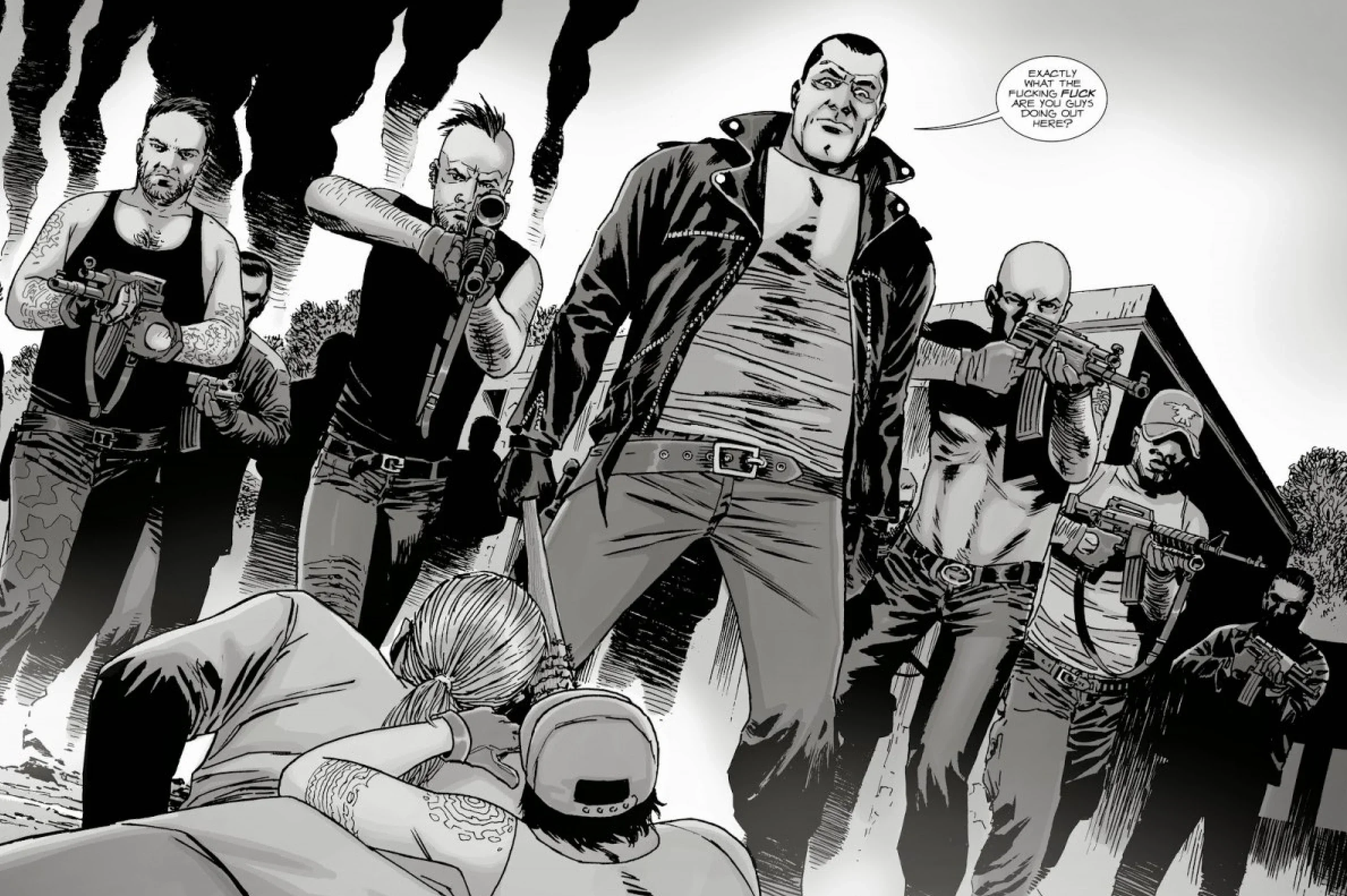
Charlie Adlard's contribution to this process is fundamental. Through his artwork, Kirkman's characters gained a distinct visual identity that made them instantly recognisable. Whether it was Michonne's imposing silhouette, katana in hand, or Negan's menacing grin as he carried Lucille on his shoulder, Adlard helped transform these characters from figures on a page into some of the most iconic personalities in modern comics.
The result is a cast that remains one of the series' greatest achievements. Long after readers have forgotten specific battles or storylines, they remember the people who lived through them.
Why and how to read The Walking Dead in 2026
More than twenty years after the release of its first issue, The Walking Dead remains one of the most compelling comics ever published. Its memorable characters, emotionally charged story arcs and shocking plot twists helped redefine what a zombie story could be. More importantly, it is a series that asks difficult questions about human nature, morality and survival, making it just as relevant today as it was in 2003.
The success of the television adaptation further cemented the franchise's place in popular culture. While some comic book readers criticised certain changes made for television, the show's global popularity is a testament to the strength of Kirkman's original concept and the enduring appeal of its characters.
For readers approaching The Walking Dead in 2026, there are two main ways to experience the series.
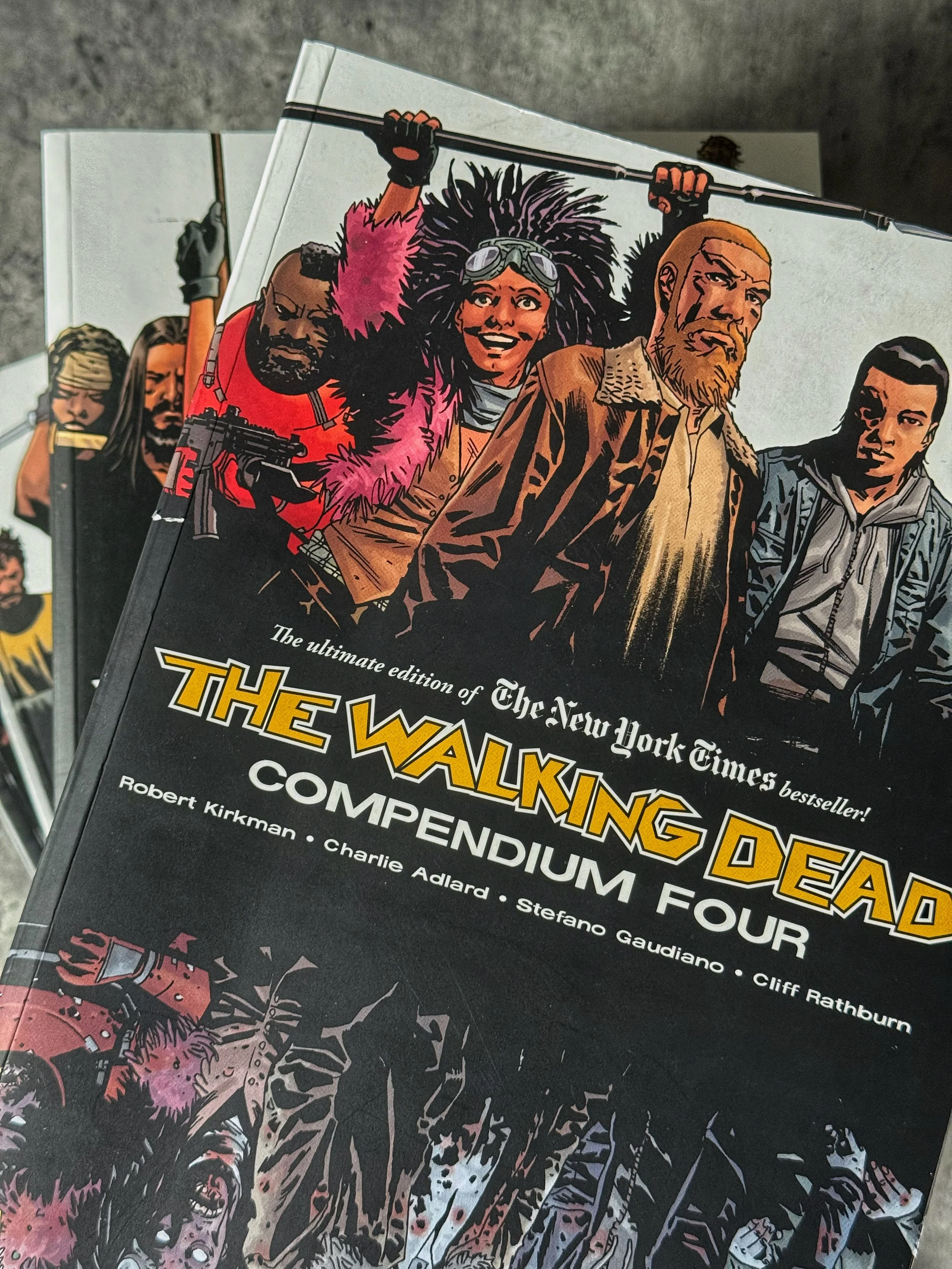
The most accessible and affordable option is through the four black-and-white Compendiums, oversized paperback collections that gather the entire 193-issue run. This is also the format closest to the original reading experience, allowing readers to appreciate Charlie Adlard's artwork exactly as it was originally published. While some readers may be hesitant about black-and-white comics, it is difficult to imagine The Walking Dead without the stark contrast and atmosphere that this presentation provides.
For those who prefer colour artwork, Image Comics is currently reprinting the series as The Walking Dead Deluxe, featuring colours by Dave McCaig. The Deluxe edition offers a fresh perspective on the series while preserving everything that made the original story such a landmark achievement.
Whether read in black and white or in colour, The Walking Dead remains essential reading for fans of horror comics, post-apocalyptic fiction and character-driven storytelling. More than a zombie comic, it is a story about humanity at its best and worst, and one that continues to resonate long after the final page has been turned.