This year's Lucca Comics & Games, aptly named Legacy, was a particularly special edition as it marked the 60th anniversary of the festival.
Over the past six decades, the event has changed and grown enormously, becoming one of the most important celebrations of comics and pop culture in the world. Yet, despite all these transformations, its heart has always remained the same.
Held from October 28 to November 1, 2026, the festival welcomed 345,000 participants, featuring over 900 guests, 800 exhibitors, 1,500 appointments and 14 exhibitions. Five days during which people from all over Europe and beyond gathered in the beautiful city of Lucca to celebrate their shared passion through panels, signing sessions, special screenings, parades and much more.
The festival brought together an impressive roster of creatives from across the comic book industry, cinema, and video games, offering fans the opportunity to meet some of the most influential names across different mediums.
The first that comes to mind, and certainly deserves a special mention, is Italian comic book artist Claudio Castellini, who was entrusted with the task of creating this year's festival poster.
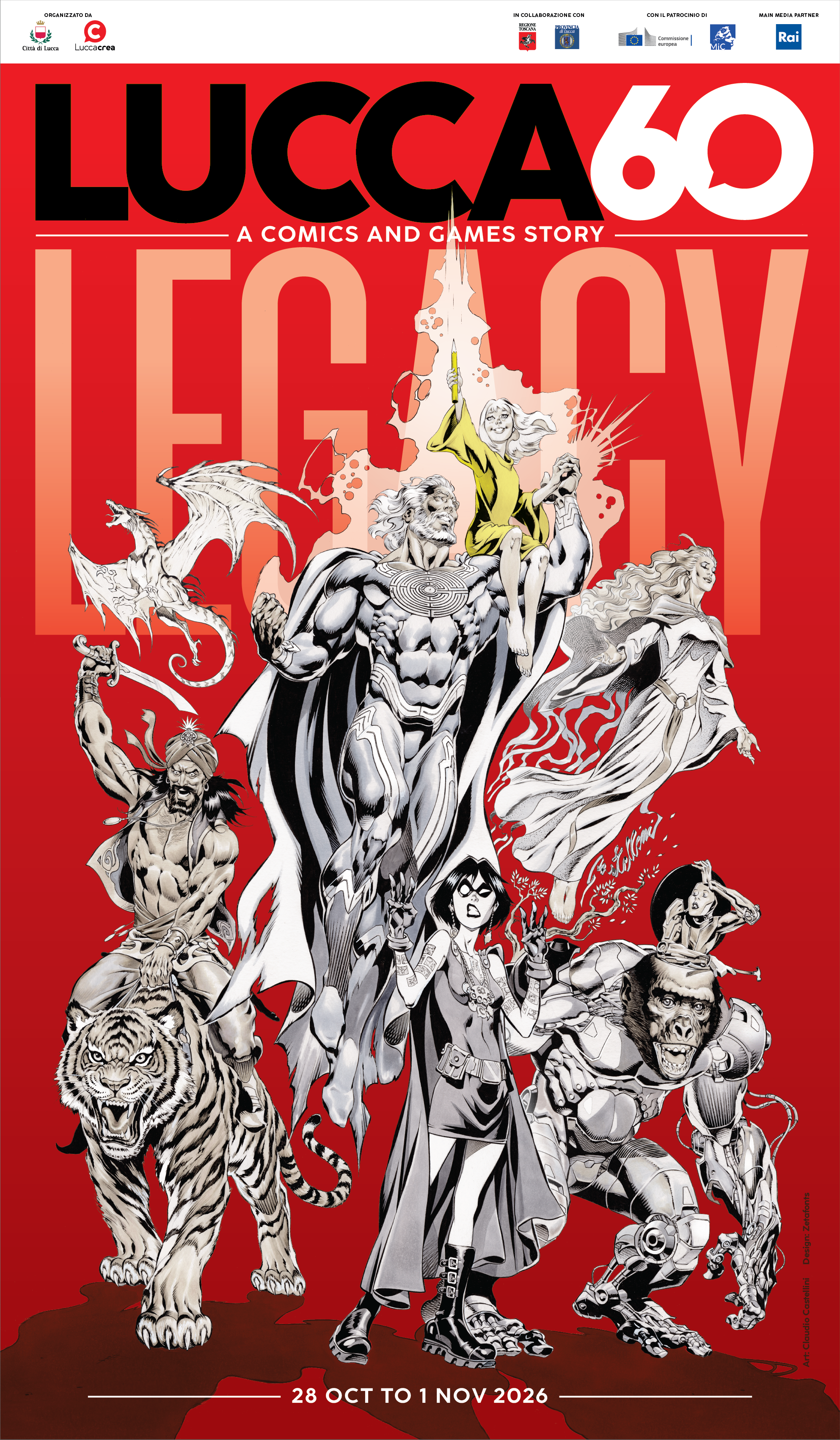
The illustration he created brings together elements from previous Lucca Comics & Games posters, merging them into one celebratory composition that pays tribute to the festival's long and rich history. A fitting choice for an edition dedicated to celebrating six decades of stories, creativity and passion.
Another artist who made this year's Lucca particularly special for manga readers was Go Nagai, one of the pioneers of modern manga and undoubtedly one of the most influential mangaka in the history of the medium. Best known for iconic works such as Devilman and Mazinger Z, his presence in Lucca was a fantastic opportunity for fans to celebrate a creator whose work has helped shape generations of manga readers and artists alike.
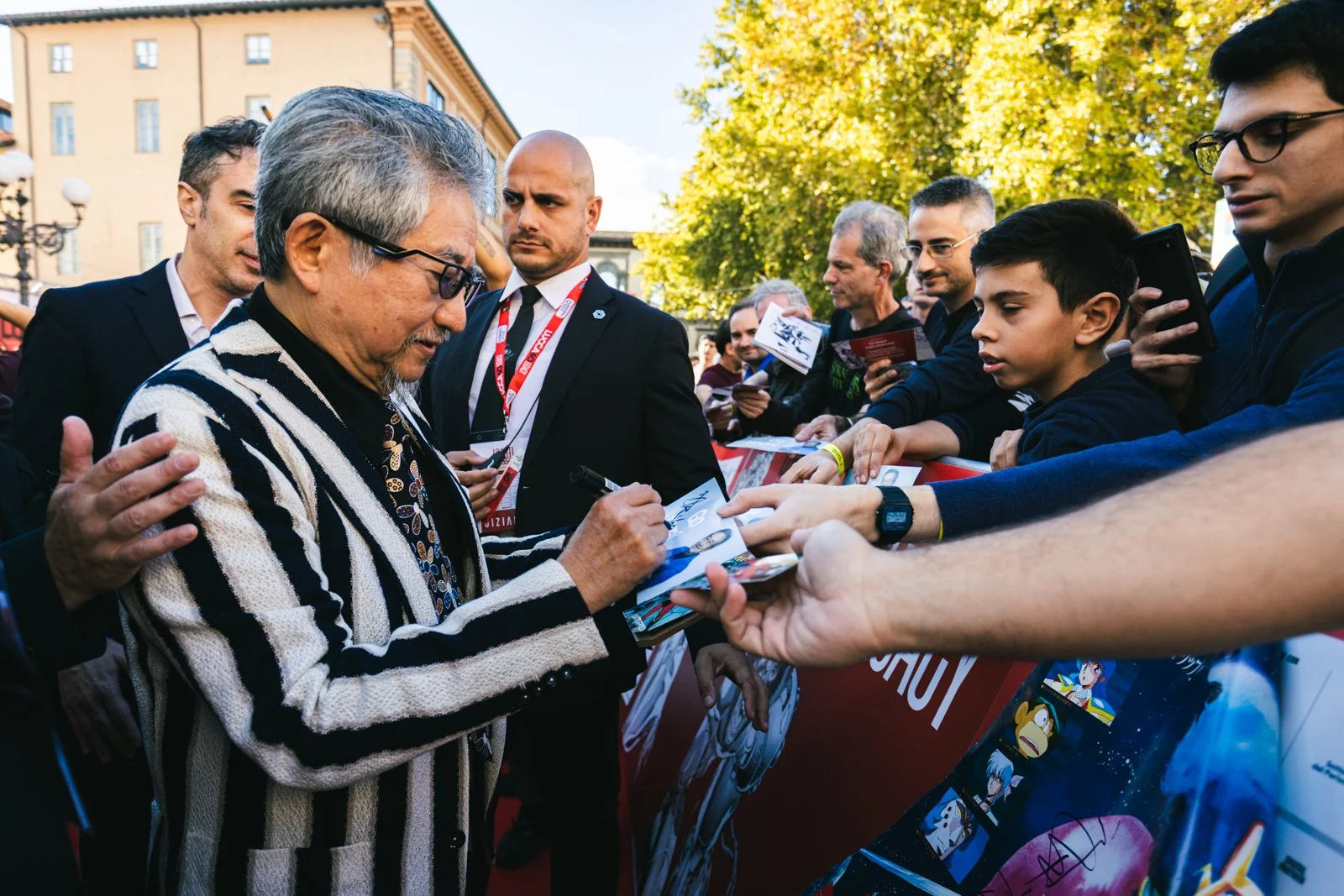
Go Nagai with fans, photo by Michele Mariani
Last but certainly not least, the legendary Frank Miller joined thousands of fans in Lucca to celebrate the 40th anniversary of two of his most influential works: Daredevil: Born Again and Batman: The Dark Knight Returns.
Both originally published in 1986, these two stories quite literally revolutionised the comic book industry, leaving a lasting mark on the medium and continuing to influence the way creators approach comic book storytelling to this day.
During several panels at Lucca Comics & Games, Miller took fans on a journey through the early stages of his career, retracing his first steps in the comic book industry, from his move to New York City and his pivotal encounter with Neal Adams to 1986, the year that changed everything.
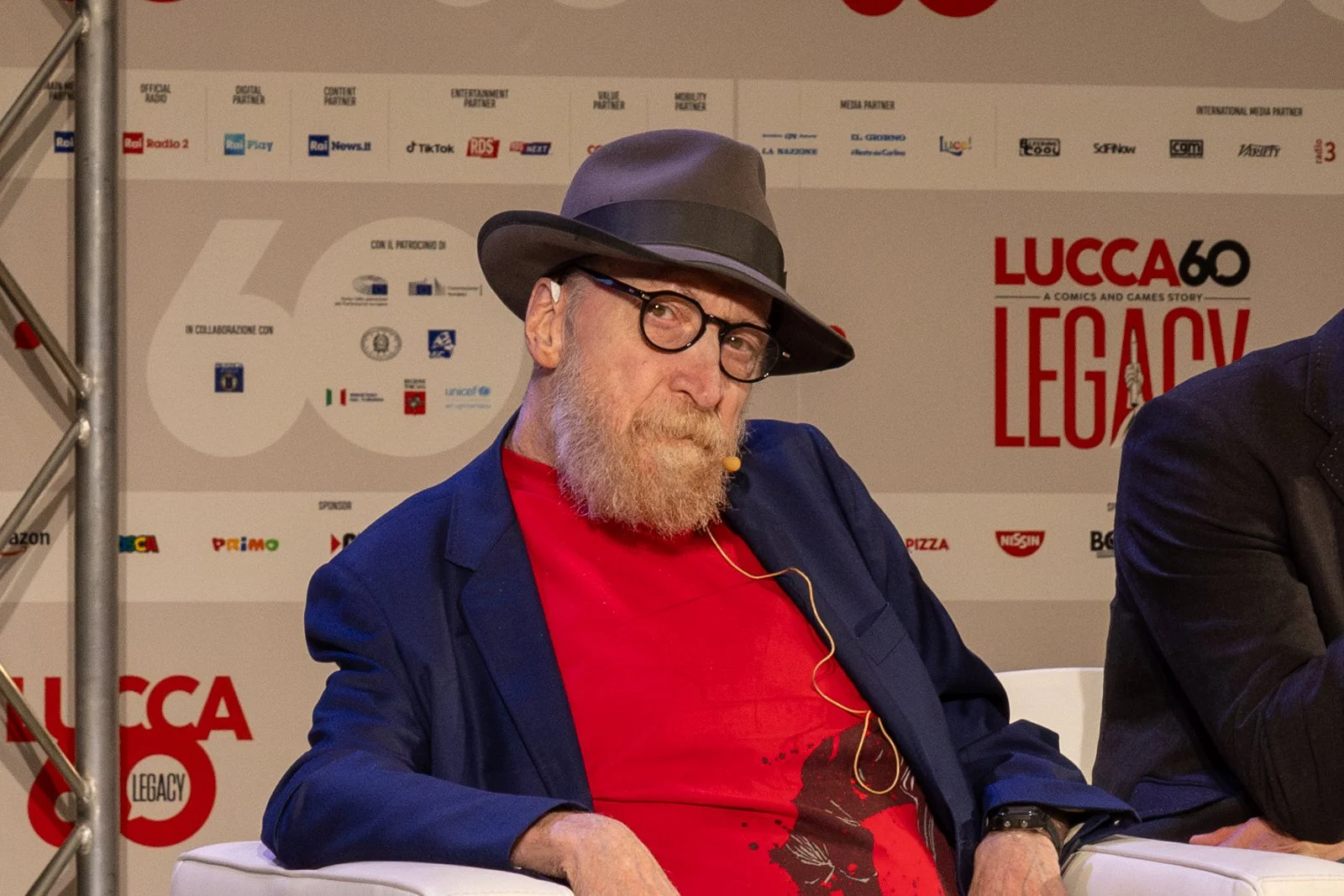
Frank Miller, photo by Gabriele Saracco
While the festival offered countless highlights, the undisputed centerpiece for many—and the focus of our deepest dive—was the celebration of Frank Miller's legacy.
Frank Miller: the past, the present and the future of comics
Some artists create great comic books. Others change the way an entire generation thinks about the medium. Frank Miller undoubtedly belongs to the latter category.
Forty years after the release of Daredevil: Born Again and Batman: The Dark Knight Returns, two works that helped redefine the boundaries of mainstream superhero comics, Miller's influence on the industry remains undeniable. But what does it take to become an artist whose work continues to inspire generations of readers and creators? And, perhaps more importantly, what drives someone who has already left such a significant mark on the medium to keep looking ahead
During several panels at Lucca Comics & Games 2026, Miller took fans on a journey through his life and career, sharing stories, memories and reflections on the art of making comics. From his early struggles in New York City and the encounters that helped shape him as an artist, to the creation of some of his most celebrated works and his thoughts on the future of the medium, the legendary writer and cartoonist offered a glimpse into the mind behind some of comics' most influential stories.
It was an opportunity to look beyond the finished pages and discover the experiences, influences and creative choices that shaped his legacy. A journey through the past, the present and the future of a medium that Frank Miller has helped transform forever.
Ronin, homage to European and Asian comics
One of the most interesting examples of this creative evolution is undoubtedly Ronin, one of Miller's most celebrated works. As he explained during the panel, the series was born out of an experiment: bringing together the traditional American comic book style with the artistic influences he had discovered in European and Asian comics.
Miller was particularly fascinated by the works of artists such as Moebius and Hugo Pratt, whose distinctive approaches to visual storytelling opened up new possibilities for him. Alongside his growing interest in Japanese manga and literature, these influences encouraged him to step outside the conventions of American comics and experiment with different artistic languages.
The result was Ronin, a six-issue series published by DC Comics between 1983 and 1984, which became a creative playground for Miller to bring all these different influences together and develop a visual and narrative style of his own.
Miller breaks Daredevil…
Following his experimental work on Ronin, Miller returned to Marvel Comics, where he had previously made a name for himself with Daredevil. This time, however, he was about to take the character in an entirely different direction.
During the panel, Miller shared what he believes to be the secret to making a character truly interesting: stripping them down to their bare essentials. Take away their comforts, their certainties and everything they rely on, and you can finally get to the very core of who they really are.
And that's exactly what he did to Matt Murdock in 1986. Together with artist David Mazzucchelli, Miller took Daredevil to his absolute lowest point, tearing down every aspect of his life to explore what remained of the man behind the mask. The result was Daredevil: Born Again, a story that would become one of the defining moments in the character's history.
…and redefines Batman
Following his defining run on Daredevil, Miller turned his attention to another iconic hero, though one with a vastly different public image at the time.
As he noted during the panel, the general perception of Batman in the mid-1980s was still heavily influenced by the 1960s Adam West television series, which had left the Caped Crusader widely regarded as a campy, somewhat comical figure. Miller wanted to shatter that watered-down image and do something entirely different. His vision was to return the character to his gothic roots, crafting a much darker, grittier narrative that reflected the anxieties and the sociopolitical climate of 1980s America.
The result was Batman: The Dark Knight Returns—a bleak, uncompromising masterpiece that not only reinvented the character but also served as a dark mirror to society. Frighteningly enough, the satirical, media-obsessed, and polarized America depicted in those pages still feels incredibly relevant today.
But Miller’s reconstruction of the Bat-mythos wasn't finished. While The Dark Knight Returns pushed Bruce Wayne into a mythic, near-apocalyptic future, his subsequent masterpiece, Batman: Year One (reuniting him with Daredevil collaborator David Mazzucchelli), explored the exact opposite end of the spectrum.
During the panel, Miller reflected on this stark contrast. He noted that in The Dark Knight Returns, Batman was essentially going up against a "god" in the form of Superman. With Year One, however, the goal was to bring the vigilante back down to earth. Citing composer Richard Wagner as a thematic inspiration, Miller explained that he wanted to return Batman to a "lower level," making his struggles more grounded and much easier to empathize with. By stripping away the grand superheroics and focusing on the gritty street-level crime of Gotham, he distilled the character down to his purest essence.
"Batman is just a man who wants to make things better," Miller told the Lucca crowd. "That's Batman Year One."
Hollywood heartbreak and the road to Basin City
Following his monumental successes at Marvel and DC, Miller's career took a high-profile detour into Hollywood. "I wanted to learn how to write for cinema, how to write screenplays," he explained to the Lucca audience. But the transition to the film industry proved remarkably challenging. Surrounded by seasoned veterans and the relentless studio machine, Miller confessed he "felt like a goldfish in an ocean. Everyone was so good and I wasn't. It was a lesson on humility."
That frustrating environment ultimately helped him realize exactly where he belonged. Disillusioned by a system where a writer's vision is constantly diluted, he recognized that his true home was the one medium where he could be the absolute master of his craft. "Cinema wasn't the world for me!" he admitted. "Back to comics, I just wanted to write. I didn't want to think about other things like sales."
He returned to the drawing board with a vengeance, launching Sin City at Dark Horse Comics. Stripped of color and drenched in uncompromising, high-contrast shadows, it wasn't just a stylistic triumph; it was a bold declaration of independence. "Sin City was the book I wanted to do in full Noir style, it was a liberation," Miller noted. Fueling the project was a defiant desire to craft something purely, inherently unadaptable: "I thought, 'I'm going to make a book they can never make a movie about,'" he recalled with a laugh—a deeply ironic reflection, given the groundbreaking cinematic adaptation he would later co-direct.
Wrapping up his reflections on that era, Miller offered a powerful piece of advice to the aspiring creators in the crowd, perfectly encapsulating the rebellious philosophy that birthed Basin City: "For the people out there who are writing stories: don't think so much about what people want. Do what you want to do. This is how Spielberg got E.T.!"
The origins of 300
Fast-forwarding through his groundbreaking work in the 1990s, the conversation in Lucca inevitably turned to another monumental milestone in Miller's bibliography: his 1998 historical epic, 300. When asked about the genesis of his hyper-stylized retelling of the Battle of Thermopylae, Miller shared a remarkably personal origin story that dated back to a formative childhood memory.
He recounted a trip to the cinema with his father and brother to watch a movie about a small band of Spartan warriors fighting against impossible odds - the 1962 film The 300 Spartans. As a young boy accustomed to traditional, triumphant Hollywood endings, watching the brutal, inevitable slaughter of the film's protagonists left a profound and unsettling mark on him.
"But the good guys can't die!" he remembered thinking at the time.
That intense childhood shock - the jarring realization that heroes could lay down their lives and lose the battle, yet still achieve a legendary victory - stayed with him for decades. Years later, Miller would channel that lingering emotional impact onto the comic book page, taking the ancient historical tragedy he first discovered in a dark movie theater and completely making it his own. The result was a bloody, visually breathtaking masterpiece that would once again reshape the comic book landscape.
Looking to the future: why we still need heroes
While much of the conversation at Lucca focused on Miller's past and how his masterpieces continue to shape the comic book landscape today, the panel also cast a deliberate gaze toward the future through the eyes of the legendary artist.
Despite the dark, cynical worlds he is famous for creating- from the blood-soaked battlefields of Sparta to the dystopian streets of Gotham - Miller remains profoundly optimistic about the core function of storytelling. When asked about the future of the medium and the evolving role of the superhero in modern times, his answer was definitive.
"The world still needs stories about heroes," Miller declared to the audience. "It always will and always has."
For a writer who spent so much of his career successfully deconstructing these very archetypes, his fundamental belief in their inspirational power remains entirely unshaken. Ultimately, he argued, these larger-than-life figures serve a vital, timeless purpose that goes far beyond simple entertainment.
"Heroes are the hope of seeking our better selves," he explained. "They're that something that helps us, starting when we're children, to believe in ourselves and try to make things better."
It was a poignant note to strike, serving as a powerful reminder that underneath the high-contrast noir shadows and the uncompromising grit that define his legacy, Miller’s work has always been driven by a deep, underlying belief in the human spirit and the enduring power of myth.
A special thanks
Before wrapping up, we want to take a moment to publicly thank Lucca Comics & Games for hosting us for the second year in a row. Having the opportunity to fully immerse ourselves in the beautiful city of Lucca for five truly unforgettable days has been an absolute privilege. The energy of the crowd, the passion of the creators, and the magic of walking those historic walls surrounded by the best of pop culture is an experience like no other. Thank you to the organizers for another incredible edition—we can't wait to see what the future holds for this extraordinary festival.