John Layman and Rob Guillory on Their New Series, Ghostbrawler
In 2009, Image Comics published Chew, the Eisner Award-winning comic series created by John Layman and Rob Guillory. Nearly a decade after the series ended in 2016, the acclaimed creative duo has reunited for a brand-new project: Ghostbrawler.
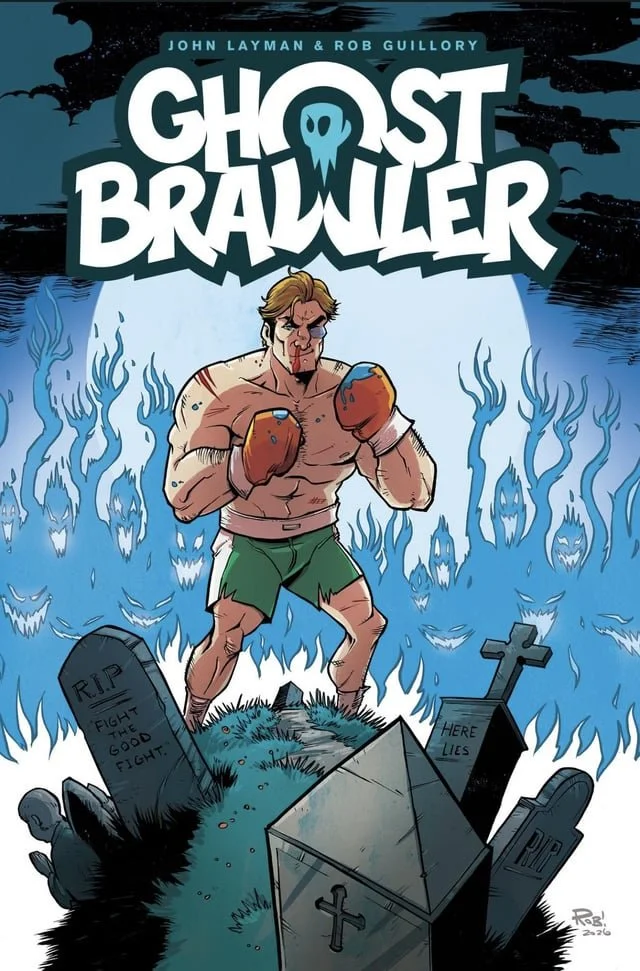
Described by Layman as a mix of mob movies, boxing dramas, and supernatural horror, Ghostbrawler follows Joey Frezzini, a former boxer who died in the ring and now makes a living taking down ghosts with his fists. The series draws inspiration from films like Raging Bull, Rocky, and Ghostbusters, blending violent supernatural action with a surprisingly heartfelt protagonist.
During our conversation with Layman and Guillory, the two creators revealed in an interview with Pages and Panels that Ghostbrawler will feature a simpler and more emotionally driven story compared to Chew, while still maintaining the humor, action, and energy that made their previous collaboration so beloved among readers.
The first issue of Ghostbrawler is now live on Kickstarter, including a special black, white, and blue process edition titled The Bruiser Edition.
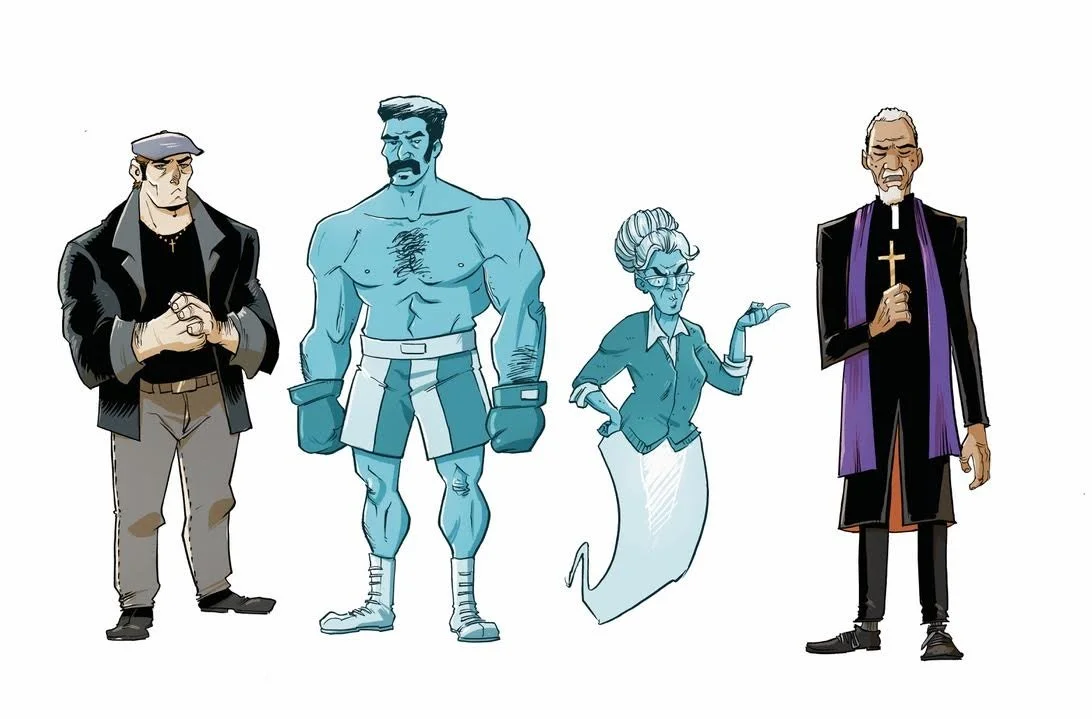
Rossano D’Angelo: Ghostbrawler has already caught a lot of attention, especially with the description of it being “like a Rocky Balboa as a Ghostbuster who busts ghosts with his fists.” Can you tell us more about what the comic is about beyond the basic synopsis?
John Layman: It’s been about 10 years since we worked on Chew, and it just felt like the right time for us to get back together and create something new. We wanted to do a book that feels different, but still shares the same spirit that Chew fans enjoyed.
So we aimed for something fun - full of action, violence, and humor - that could appeal to that same audience. At the same time, the concept is a bit simpler. Chew had a lot of moving parts: the bird flu, characters with strange powers, and all kinds of crazy elements.
With Ghostbrawler, the premise is much more straightforward: it’s about a guy who goes into haunted houses and beats the crap out of ghosts.
**Interview Continued Below** ↓
Rossano D’Angelo: John described Ghostbrawler as a more straightforward and action-driven story compared to Chew. Rob, what does this project mean to you, and what stood out to you when John first pitched it?
Rob Guillory: I agree with a lot of what John said. I think this is a much simpler story in a lot of ways. With Chew, there were so many moving parts, side stories, and quirky little details woven into the narrative.
When John first pitched Ghostbrawler to me, I honestly didn’t know what to expect. But that was also true with Chew. When he first pitched that series, I remember thinking, ‘I don’t know what this is.’
With Ghostbrawler, though, I was pleasantly surprised when I received the first script and read it. It just felt like - I guess we’ve gotten older [laughs].
Rossano D’Angelo: Even though Ghostbrawler has plenty of violence and horror elements, it sounds like there’s also a more emotional side to the story. How would you describe the tone of the series compared to Chew?
Rob Guillory: I think we’ve just matured over the years. It’s been a decade since Chew, and there’s a sweetness to Ghostbrawler that surprised me. It still has the violence and some genuinely scary moments here and there, but underneath all of that there’s a real heart to the story that I don’t think was necessarily present in Chew.
At its core, it’s a very elemental story about a simple guy who just happens to beat up ghosts for a living. I think that simplicity really comes through in the character and the story itself, and because of that, I think readers may find it surprisingly heartwarming.
John Layman: It’s very different from Chew in that sense. Everyone in Chew was funny, but they were funny because they were kind of jerks. Even Tony, the lead character, was a jerk. His best friend Colby was a smartass and a jerk too.
In Chew, almost every character was kind of a jerk, and that made them really fun to write. There were very few characters who weren’t like that.
But I think things have changed over the years. Maybe it’s age, maybe it’s the world we’re living in now, but I feel more drawn to creating entertainment that’s less cynical and a little kinder.
So with this character, yes, he beats up ghosts, but he’s actually a genuinely good guy. He’ll cut a friendly ghost a break, rescue a puppy, help a kid, or save someone in trouble. He’s basically a pure-hearted lunkhead.
That comes from a very different place creatively for me. I think about characters like Raylan Givens from Justified - someone who, at his core, wasn’t morally compromised.
Rossano D’Angelo: The main character, Joe Frittini, seems heavily inspired by classic Italian-American crime and boxing stories. What influences shaped the character and the world of Ghostbrawler?
John Layman: Joe Frittini is Italian in the same way Tony Soprano is. The book borrows a lot from Scorsese movies like Raging Bull and Goodfellas.
Joe is basically Peter Parker as a boxer. He’s down on his luck and can never seem to catch a break. A major part of the story is that he bet on himself in a prize fight and lost. Now he owes money to the mob.
So he’s constantly trying to stay one step ahead of these mobsters who are basically telling him, ‘Joey, we love you, but if you don’t pay us back, we’re going to start cutting off fingers and toes.’
The story plays with a lot of classic mob movie tropes and boxing movie tropes, but then mixes them with ghosts and supernatural horror. So it’s kind of Scorsese by way of Raging Bull, mixed with Rocky, Ghostbusters, The Exorcist, and Poltergeist.
Rossano D’Angelo: How did the idea for the series first come together?
John Layman: Just like Chew, this book came from combining a few different ideas together. I originally had a story about someone who could interact with ghosts, and it went through a lot of different versions because I tend to overcomplicate things.
Eventually, I landed on the idea of a boxer who gets killed and comes back. Stories about people returning and seeing ghosts aren’t necessarily original on their own, but the twist here is that he’s a boxer - and he can punch ghosts. So he does what he does best: he goes in and roughs up the bad guys.
A lot of the inspiration comes from familiar pop culture influences. There’s Scorsese-style mob drama, boxing movie energy like Rocky and Raging Bull, and then supernatural horror elements mixed in as well. You take familiar ingredients and hopefully turn them into something new.
Rossano D’Angelo: Rob, how did you approach the visual style of Ghostbrawler?
Rob Guillory: It’s still early, but we already have the first three pages fully finished and lettered.
Artistically, I’m in a very different place now than I was during Chew. I feel a lot more confident after not only Chew, but also working on Farmhand. After doing something as serious as Farmhand, I really wanted to return to something more cartoony and fun.
So when John brought this project to me, I immediately knew what I wanted to do with it. The style people associate with Chew is really just the natural way I draw, but I think it’s evolved a lot since then.
With Ghostbrawler, I wanted the art to feel a little slower-paced and a bit more detailed than Chew. It still feels consistent with my style, but more like the next evolution of it.
Honestly, the pages I’ve done so far are some of my favorite pages I’ve ever drawn. I think the work is really strong, and I can’t wait for readers to see those first few pages.
Rossano D’Angelo: John, after seeing the new pages from Ghost Brawler, what stands out to you most about Rob Guillory’s artwork today compared to the Chew era?
John Layman: Rob sent me some of the new pages, and I showed them to a few close friends of mine. One of them immediately said, ‘Wow, Rob’s gotten a lot stronger and more confident since Chew.’ And honestly, that’s what 15 or 20 years of experience will do for you.
Rossano D’Angelo: Rob, how do you feel your art style has evolved since Chew?
Rob Guillory: I think there’s a level of finesse in my work now that I didn’t have before. When I look back at Chew, especially those early issues, the art feels incredibly raw. There was a lot of energy there, but now I feel much more refined and confident in what I’m doing.
Rossano D’Angelo: Ghostbrawler clearly shares some DNA with Chew, but it also feels very different in tone and intent. John, how did your experience writing Chew influence this new story without simply repeating what worked before?
John Layman: I think the biggest difference is that the heart behind the story comes from a very different place now. Rob and I are older - hopefully wiser too - and even though Ghostbrawler still has violence and brutality, it feels like a gentler and less cynical book underneath it all. In a strange way, I think I needed that creatively. It almost feels therapeutic.
At the same time, I still know how to structure a story and what makes a comic work. Every supporting character has their own motivation, their own personality, and usually something funny about them. You take all of those different ingredients, combine them together, and hopefully you end up with a really entertaining and funny book.
Rossano D’Angelo: Rob, you mentioned earlier that your artwork has evolved over the years. Did working on Ghostbrawler feel like a natural continuation of that artistic growth?
Rob Guillory: For me, artistic growth tends to happen in bursts. I’ll work for a while in one mode, and then suddenly there’s a leap where it feels like I’ve leveled up.
That happened several times during Chew. You could look at certain issues and immediately notice a jump in the artwork. After Chew ended, I went straight into Farmhand, which was a very different kind of book. Because it had a more serious tone, I had to hold back some of the more exaggerated and cartoony instincts I naturally wanted to explore.
Coming back to Ghostbrawler has honestly felt like a huge relief. Drawing these pages feels incredibly natural to me, almost like releasing something that had been building up for years. It really feels like the next stage of my growth as an artist - and more than anything, it’s just been a lot of fun to work on.
Rossano D’Angelo: Do you have an estimated release window for Ghost Brawler, and what can fans expect from the Kickstarter campaign?
John Layman: Right now, Rob is actively working on the book, and the Kickstarter campaign will launch with a special edition of the first issue called The Bruiser Edition.
It’s going to be a black, white, and blue process edition. Instead of traditional full color, readers will see the comic in black and white with Rob’s blue-line pencils clearly visible, almost like an artist’s edition. The lettering, sound effects, and certain details will also be highlighted in blue.
The Kickstarter edition will include the complete first issue along with extra story pages, covers, and additional material. We wanted to create something collectible and visually unique before the standard full-color release.
Ideally, we’d like the regular release of Ghostbrawler to begin around October 2026, which would coincide with the 10th anniversary of Chew ending. Of course, schedules can shift depending on publishing logistics, but we’re aiming for a fall launch.
The Kickstarter is also important because it helps us build momentum for the series. The goal isn’t to get rich - it’s to help fund the book properly so we can stay ahead on production, build inventory, and make sure the series has a strong and consistent launch.
Rossano D’Angelo: Rob, from a production standpoint, how far along is the book already?
Rob Guillory: There’s a good chance I’ll have a significant portion of the first issue finished before the Kickstarter even launches.
I’ve always worked pretty quickly - during Chew, I was basically producing a page a day - so I think the schedule we’re aiming for is realistic.
Once we sort out the printing logistics and everything else, I’d love for Kickstarter backers to receive their copies sometime around July or August.
And honestly, compared to something like Farmhand, this book feels much more natural and easier for me to draw. It really feels like I’m having fun again.
Rossano D’Angelo: If you could go back 20 years and give your younger self one piece of advice at the start of your comics career, what would it be?
John Layman: I’d probably tell myself not to work with certain publishers or certain creators - though I won’t say who publicly.
I think everyone in comics has a few missteps along the way, and I’ve definitely had mine. Looking back, avoiding some of those situations probably would have saved me a lot of aggravation.
That said, who knows? Maybe those experiences also shaped where I ended up today.
Rob Guillory: Honestly, I’d tell myself to take a few business classes.
When I started working on Chew, I was still really young - in my early twenties - and I was completely focused on the creative side of making comics. I didn’t think much about the business side of the industry.
I’ve had to learn all of that on the fly over the years, and sometimes it’s been painful. So yeah, I’d probably go back and just tell myself: “Trust me, take the business classes.”
We would like to sincerely thank John Layman and Rob Guillory for taking the time to speak with us about Ghostbrawler, their creative journey, and the passion behind this new project.
After our conversation, it’s clear that Ghostbrawler is more than just a reunion between the creators of Chew - it’s a project shaped by years of growth, experience, and a renewed creative energy that both creators seem genuinely excited to share with readers.
We wish them nothing but the best for the launch of Ghostbrawler and look forward to seeing Joey Frezzini punch his way through the supernatural world when the series arrives later this year.