The FOMO Effect
The culture around comic books has dramatically changed over the past few years.
What once revolved around stories and characters has, in some ways, shifted toward the chase for collectibles: variant covers, exclusive editions, and blind bags that often end up stored away, unread.
I’m saying this because I’ve been there.
Not so long ago, I realised I owned hundreds of comics that I bought and shoved into dusty boxes. Many of them I don’t even remember buying, let alone reading. I unconsciously chose to give up the pleasure of reading a good story for the pleasure of chasing the next nice cover to add to my collection.
I can now say that most of the comics I owned were the result of my fear of missing out.
The fear of missing out, or FOMO, is a psychological phenomenon associated with the feeling of apprehension that one is either not in the know about or missing out on information, events, experiences, or life decisions that could make one's life better. In my case, this manifested as a sense of urgency that completely took over my passion for comics.
It was something so gradual that I can’t really say when it started, but I now see how it changed me and how it affected the way I was living my passion for comics. Instead of waiting for a really cool story to be published, I was excited about that foil variant cover or that deluxe edition that I clearly didn’t need but wanted so desperately because it looked nice on my shelf.
I’m not here to point fingers or to criticise the comic book industry. I am happy when a publication sells well because it’s a win for everyone and keeps the authors motivated to write more. But lately I’ve noticed strange patterns, especially around creator-owned titles, and I’m here to talk about what happens when two indie titles explode in the secondary market.
The strange case of D’Orc #1 and White Sky #1
D’Orc #1, by Brett Bean, with colours by Jean-François Beaulieu and lettering by Nate Piekos, was published by Image Comics on Wednesday February 4, and it went from the shelf to eBay in no time, selling for unimaginable prices on release day. This generated a general level of hype and, as a result, everyone started looking for a copy. The book sold out in a day.
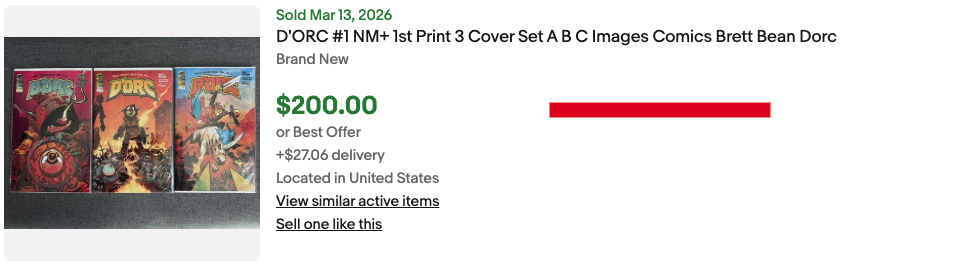
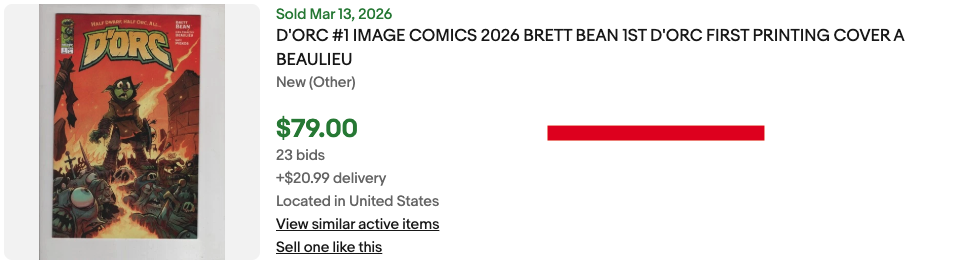
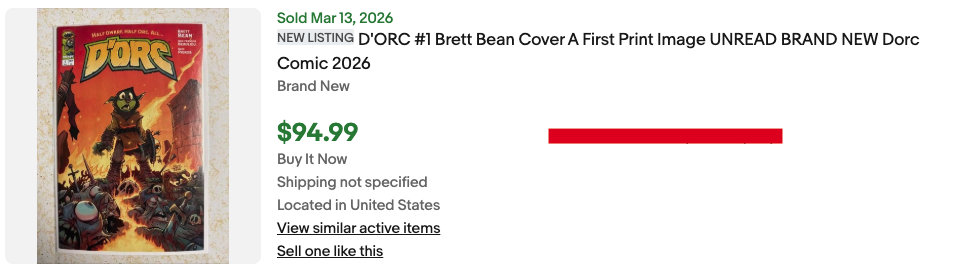
The exact same thing happened with another Image Comics creator-owned title, White Sky. Written by William Harms, with artwork by Jean Paul Mavinga, colours by Lee Loughridge and lettering by Ed Dukeshire, this debut issue was acclaimed by the public and often referred to as the “holy grail” on social media. Everyone pre-ordered a copy (or more), and many came out of their comic book stores empty-handed as this book sold out even faster than D’Orc, only to magically appear on eBay the next day.
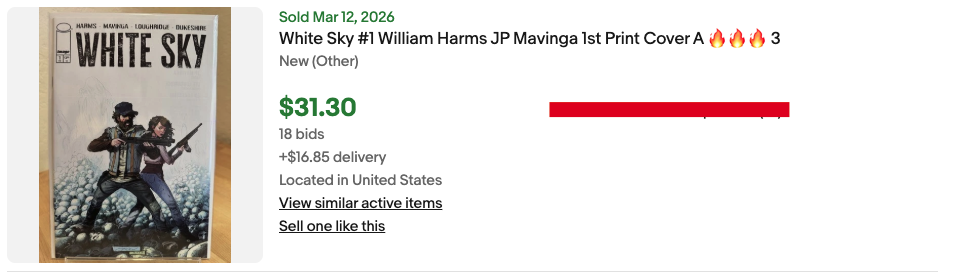
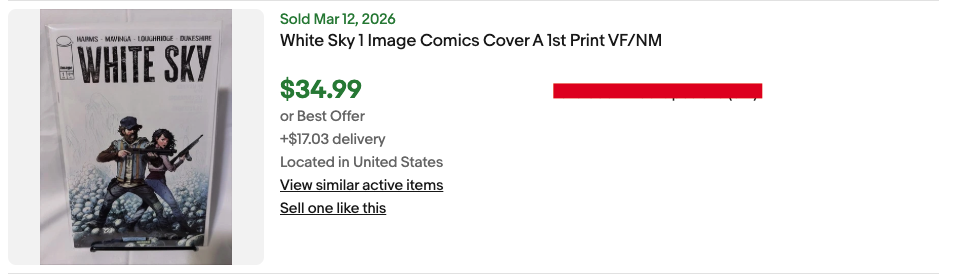
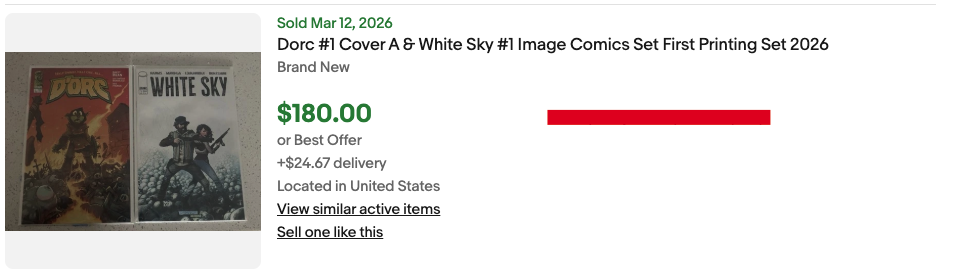
I’ve read both of these debut issues and I enjoyed them, I did. D’Orc is a fun and colourful young adult story set in a fantasy world that Brett Bean created, and it’s fun and interesting. I can't wait to read more about D’Orc’s journey.
White Sky sets a very different tone, as the story follows a father and daughter as they try to survive in a post-apocalyptic world dominated by ghosts. A plot that has been compared, even by Image Comics itself, to The Walking Dead and The Last of Us, but that has something to tell and will reveal it with time.
I want to ask a question, though.
What was really the reason these two books started selling so fast and at such wildly high prices? Well, most of the credit goes to the authors, who created two very solid debut issues. But is it possible that the hype generated on social media somehow affected the sales numbers of these two titles? (Remember, the original creators don’t make money on resells.)
I don’t want to say that they’re not worth paying for, because they are. They clearly show original and cunning work from the creators. But is this enough to justify the crazy prices we’ve been seeing on the secondary market?
Or maybe it’s just the hype making the price, with people’s FOMO doing the rest? I’m not here to give lessons or to advance criticism—I just don’t want to believe that something which once made me feel special and part of a community of stories is at risk of becoming a commodity to horde and sell.